
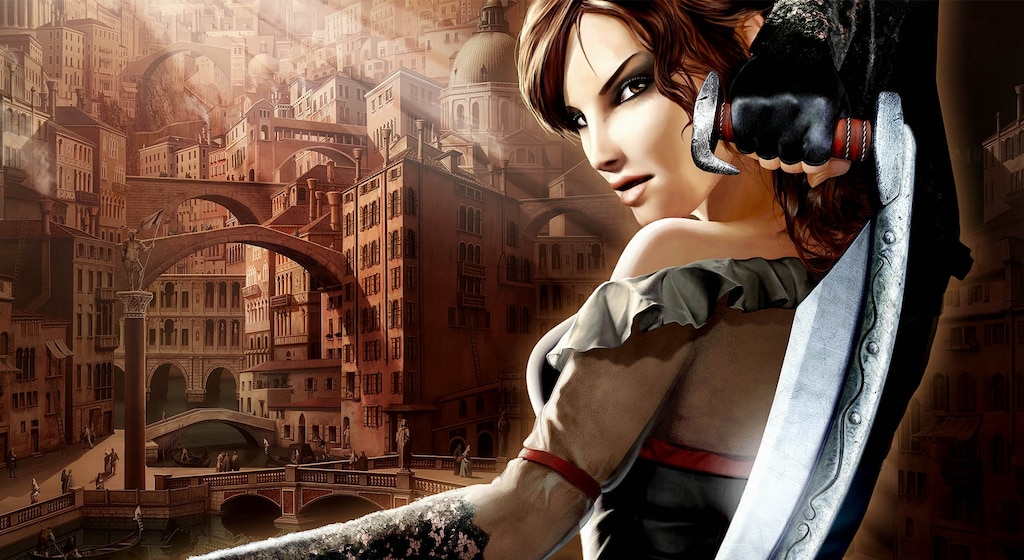
The 2000s was a golden age for RPGs. It had many heavy hitters such as the Star Wars: Knights of the Old Republic games, Bethesda’s Fallout and The Elder Scrolls games and the beginning of The Witcher series.These games are undoubtedly brilliant and have had plenty of time to garner all their praise. However, the more niche side of the 2000s RPG is a much different phenomenon and the term ‘acquired taste’ has never been more relevant. Games by Pirahna Bytes like Gothic and Risen probably fall into this category, as does Reality Pump’s Two Worlds games. They are not exactly high art and often have many issues but they just about scratch that RPG itch for those that play them. They have the endearing quality, or lack thereof, akin to them cheesy Christmas films your mum watches. They have a cult like status because people know they aren’t great but they are still enjoyable anyway by embracing what they are. Venetica released in 2009 and is one such RPG. After playing it in 2025, it was a transportation through time back to that period, for better or worse.
Venetica was developed my Deck 13 and is set in a fantastical version of Venice. It follows Scarlett, who has had her mountain village desecrated by assassins and as a result, her lover Benedict has been killed whilst trying to save her. She is visited in her dreams by Death who reveals himself to be her father, after previously thinking she was an orphan. He bestows great power on her whilst informing her of her destiny to defeat the Undead Archon, who is abusing necromancy and manipulating Venice behind the scenes. She must take up the Moonblade, the bane of the undead, and venture to Venice to stop the Archon from finding the Black Grimoire and gaining absolute power.
This is a standard fantasy RPG setup and it’s easy to tell what your getting into just from that. In fairness, the main writing is this game’s strongsuit. It weaves many themes of mortality, power and corruption in a city that is clearly on the brink of collapse. There are cutthroats around every corner and guards as corrupt as they come. The Archon is unapologetically evil and it is fun to see him and his undead council twirl their moustaches and drag Venice into darkness. Princess Chiamaka is the undead with the most interesting things to do though, acting as a foil to Scarlett and trying to restore glory to her people but ultimately driving them further down a bad road.
There is a healthy sprinkling of progressive feminism here too (aside from Chiamaka’s clear male gaze design). Scarlett herself is immediately seen as very capable. When her village is attacked, she barely hesitates to pick up a metal rod and fend off the assassins as best she can. She has a lot of agency and reguarly is seen as determined to see out her story. The player can choose in dialogue options the framework of her story and her motive, whether it be just following her destiny like Death says, or out of revenge for her lost love. There are two different endings depending on how good or evil you are throughout the story but it’s never too black and white on what is the evil option and what isn’t, which is refreshing.
In terms of the actual gameplay, the game does suffer. The combat is incredibly one note and it essentially comes down to button mashing. You can dodge roll, block and use a few magic powers but nothing is as useful as stun locking an enemy and hacking away until it dies. The difficulty is not very high either as when your health reaches zero, you have multiple charges of resurrection which just bring you back on the spot. These can be charged with only the Moonblade but it’s easy to just take an enemy down to a slither of health and finish it to reap the rewards. The enemies can be incredibly spongy towards the end of the game so higher difficulties than normal would probably just make it more tedious rather than increasing any excitment or stakes.
There are multiple side quests across Venice and its districts but none of them are particularly memorable. It is the typical ‘go here’, ‘fetch me that’ or ‘kill this’ and nothing more than that. There isn’t much variation in the way of main mission structure either other than perhaps one moment you are captured and have to use what is around you to escape. It does not help that this game is littered with bugs on modern day PCs that lead to many bouts of reloading the game to fix it. One time, a whole area just disappeared and the only way to get through it was to use the minimap to slowly edge towards the goal. There were a few crashes too which did get frustrating. There is not much mention of this on early reviews of this game so it must be just optimisation issues.
When this released, the reviews were middling at best and it’s clear to see why with a lot of its problems. However, it does have that endearing and cheesy quality that is often missing from games of today. Whether that is a good thing or not is entirely up to you but this is undeniably a product of a much simpler time on the gaming market. Deck 13 went onto make soulslikes such as Lords of the Fallen (2014) and The Surge games, the latter of which being actually quite good. There is some DNA in these games to be shared with Venetica but ultimately, it is its own little thing.
I remember when I was younger watching my Nan play this after refusing to go to sleep and I think even then I could tell this was not one of those heavy hitters that I mentioned. But it has always stuck with me for some reason and I’m glad to have gone back and played it all this time later.


 Screen Addict
Leave a comment