
A24 over the years has been praised for its consistent encouragement of originality towards its independent filmmakers. It is a running joke that people often refer to the company like it is a director saying ‘A24 makes the most messed up and cool films’ or something of that ilk. They are merely a distributor but it is hard to argue they have not formed an identity concerning most of the films they greenlight. For all its more arthouse horror pieces like Midsommar or Men, to its thought-provoking dramas like Past Lives or Civil War, these big titles in A24’s catalogue show their effort to pioneer independent filmmaking. Opus is their most recent effort and it is the debut title for director Mark Anthony Green. It has many signs of an A24 film but to the point where it seems more like a parody, and it is doubtful that was the intention.
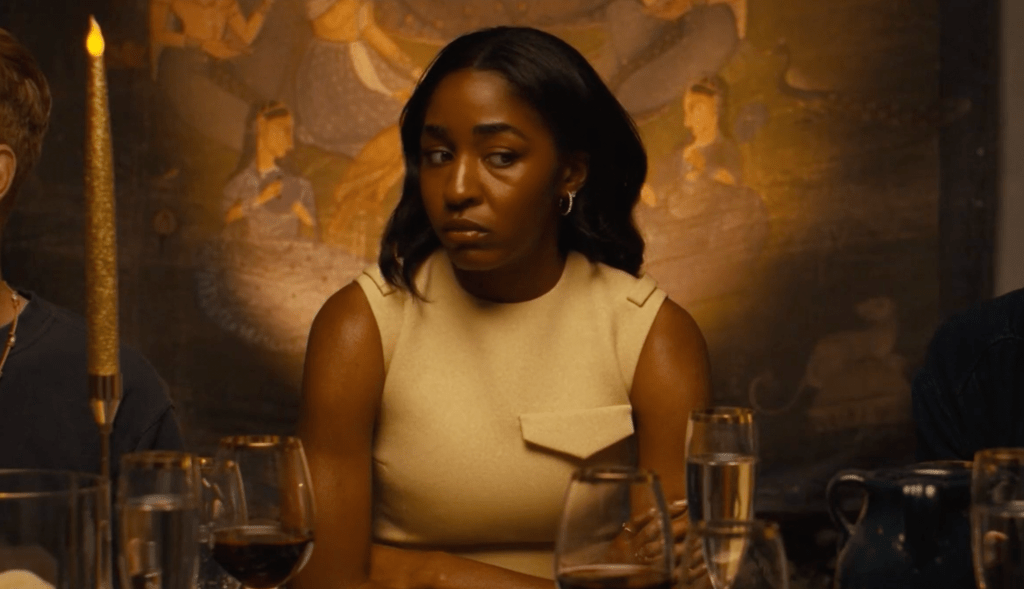
Opus follows Ariel (Ayo Edebiri) who is invited to the home of a legendary popstar, Alfred Moretti (John Malkovich), for the launch of his new album. Moretti has appeared after a 30 year disappearance and his huge estate is populated with the many followers of a cult-like organisation called The Levellists. Moretti seems to be the leader and they live there with him in what seems like harmony. As Ariel and her journalist acquaintances spend time there, they realise that some sinister plot is going on in the shadows.
Now from hearing this description, you probably could make a guess exactly where this is going to go and the odds are, you would probably be correct. This is so derivative and predictable that even if the aspects it takes from other films (like the recent Blink Twice or the aforementioned Midsommar) are good ideas, it simply reminds the audience that they are watching an emalgamation of better films. The writing is bare bones. It has these moments where the characters are talking philosophically and it is either derivative or just jibberish that sounds smart on the surface but is realistically saying nothing new at all. There is a lot of comment about idolising celebrities being bad and that you have to take cheap shots to get anywhere in life meaning nobody is fully clean. These themes could have been handled worse but they are nothing new and do not justify the film’s existence.
The main issue is the film’s structure and pacing. It starts off fine but once Ariel arrives at the estate, it goes off the rails. The typical thing with this type of film is that the characters will go around and witness strange things amongst the cult members to create a mutual feeling of unease between them and the audience. There is a little bit of that but nothing incredibly disturbing to give any impact. One scene involving an uncomfortable album listening party is the one standout but there is nothing else of note. The characters follow the schedule of the day and it is not until very late on that revelations come to light. The film plods along at sluggish pace with sparingly-used weird scenes until the film finally stumbles upon the third act. At this point there is little runtime left and the subsequent events are incredibly anti-climactic. When thinking of the great horror A24 has distributed over the years, they often managed to make the ending impactful. Saint Maud, Hereditary and Men as examples, they all end with a dramatic lasting impression and Opus ends with a splat.
When the script does not work, the performances still are faultless. Edebiri is full of charisma, as always, and even if the script isn’t entirely comedic, she still manages to ace her deliveries in funny ways, and come straight back down to earth for the more serious scenes. For Malkovich, chewing the scenery would be an understatement, and yet it works. He is clearly having a fantastic time playing this eccentric cult leader and it is believable Moretti used to be a popstar with the confidence he exudes in the right moments. That album listening party scene mentioned earlier is a perfect example of this and his boisterous dancing is deeply strange, yet entrancing to watch. If these performances weren’t this solid, the film would completely fall apart.
Even if Opus has not quite fallen apart, it is still crumbling at the seams. There is not enough here to justify its exsitence and mainly just plays it too safe. It begs the question though that even if it did have more interesting elements to keep it up to par with films of similar kind, is this whole kind of film starting to get old? There have been so many of this kind of film where a character (or multiple) goes to a place, it is all a bit strange until a scheme is unveiled and then all hell breaks loose. It is very getting repetitive but if they have interesting enough ideas surrounding it, who is to say it can’t still work? The fact of the matter is, Opus just doesn’t and instead feels lazily strung together in the shadow of better films.


 Screen Addict
Leave a comment