
Abel Tesfaye, better known as The Weeknd, is one of the most popular music artists in the world of today. He is currently the artist with the third most monthly listeners on Spotify and he was the first ever to surpass 100 million monthly listeners. Clearly, his music means a lot to so many people and although I would not personally choose to listen to him, I would never really complain if his stuff came on. Like many popular music artists though, Tesfaye has recently attempted to venture into acting. He famously co-created and starred in HBO’s The Idol in 2023 with Sam Levinson, which was met with pretty unanimous negativity. I avoided it like the plague but those that did not generally said it was bad in every regard. With this being said, surely Tesfaye could only really go upwards from there, right? Well Hurry Up Tomorrow is his second attempt and it is focused on him and what he knows best, his music. Unfortunately though, what we are given is an incoherent mess that is devoid of any real substance and all that’s left is its grossly self-indulgent nature.
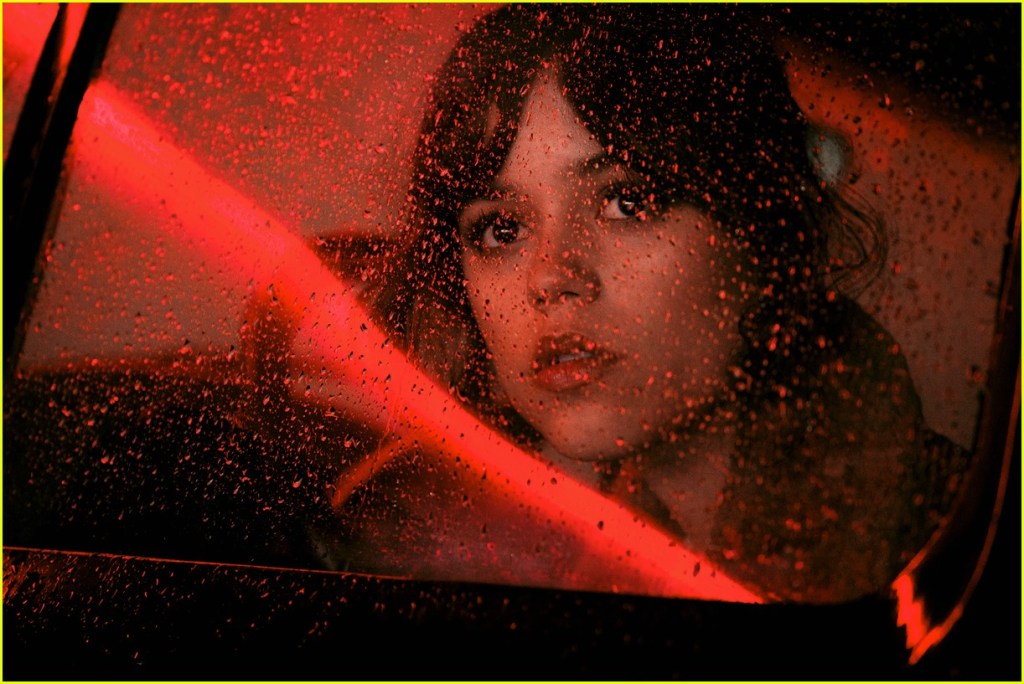
Hurry Up Tomorrow coincides with the name of The Weeknd’s most recent album and it is supposed to act as a companion piece to that album. It follows Tesfaye playing a fictionalised version of himself that is struggling to sleep, has clearly had some problems with his girlfriend and is even literally losing his voice. His manager Lee (Barry Keoghan) is trying to encourage him to move on from his relationship, desperately diverting his focus to who he is and how much his fans love him. Meanwhile, Anima (Jenna Ortega) is having her own problems. After she goes to a The Weeknd concert to escape her problems, a chance encounter with her idol leads them to both have an examination of who they are.
To examine the writing and the plot of this film is a daring task in itself because there is really not much to actually pick apart. There is tidbits of themes scattered about but none of them are present enough to establish a proper throughline. Like any film focusing on a musician, there is the obligatory nods to struggling from success and not being able to deal with the pressure of fame but it adds nothing new to it. Lee pleads to Abel a couple of times asking him to listen to the crowd cheering to help him realise why he does what he does and that is a nice sentiment but it is not built upon any further. In fact, listening to this encouragement leads to him going on stage and having to flee the concert because he is losing his voice. He doesn’t even apologise when he leaves either, he just leaves and it makes that idea of doing it all for the fans to the very limit feel quite flat because of how he disrespects them in that moment. There is no point of reflection about that night either as it is all completely overtaken by spending time with Anima. There is no examination of how defying doctor’s advice to do it or disappointing the fans was a mistake because he just says he would go to wherever the tour takes him next. Any reflection he has is purely to do with his relationships with women and not how he treats his career which just leaves plot threads hanging. Even then, anything to do with his toxicity in his relationships is very bluntly dealt with and this film hardly even feels it has an ending as a result.
Surrealism is clearly the approach taken with a lot of this film but its issue is in making that surrealism mean something. There are some visually striking scenes that are some parts dreamlike and other nightmarish but they do not mean much. Of course, there is the idea that Abel is an insomniac and that is the reason for so many of these strange scenes, but it hardly offers any insight other than that his head is an absolute mess. There is one scene wherein Anima is trying to understand Abel like we are and uses some of his past songs to try and convey the point. However, this is where the film really gets self-indulgent because all we see is Jenna Ortega dancing to ‘Blinding Lights’ and asking the creator of the song and the audience to listen to and appreciate the depth of the lyricism. Honestly can you get any more blatant? Anima might as well have just said ‘oh Mr. Weeknd, your music is so brilliant and there is so many layers to your magnificent work’. It serves the same purpose by being aggressively disingenuous. Anybody that watches it and is not a fan of The Weeknd will no doubt be put off by this because it just comes across as narcissistic with little room to decipher anything else amongst its abundant boisterousness. It helps even less that, yes, Tesfaye may be good at music, but he does not have much talent for the screen. The script does him no favours but he has no real charisma. Jenna Ortega and Barry Keoghan are alright, considering the script, but it does not save the film because they have little to do to give their performances any impact.
Hurry Up Tomorrow is an absolute shambles. There are some interesting visuals that can be quite eye-catching but that is the extent of my praise. This feels very cynically made with its gross self-indulgences and it makes you wonder what Ortega and Keoghan’s agents were thinking. It is embarrassingly written with repetitive, hollow dialogue that might as well not be there and the performances cannot disguise that. Tesfaye has a writing credit which is laughable because that means there is a chance he wrote that ‘Blinding Lights’ scene himself, as hilarious as that might be to think. I don’t like to dunk on films, especially when they are probably more tailored to people other than myself (in this case Tesfaye’s own fans). But there is a limit and if being a fan leads me to eat this slop up then I shall stay well away.

 Screen Addict
Leave a comment