
After the critical and commercial failure of Dune (1984), Lynch’s identity was slipping away. Eraserhead really demostrated Lynch as a unique force in cinema and whilst The Elephant Man was an excellent film, it was not Lynchian on the surface. It had Lynch’s key themes that he would later use but that boisterous surrealism that was so present in Eraserhead was absent. He really needed a film to establish his identity and prove that he would become that directorial force that he had been talked up as years ago. Luckily whilst Lynch was bogged down and trying to salvage whatever he could with Dune, steps were being made to do so. He spoke with producer Roberth Roth after initially discussing his Ronnie Rocket script, which never came into fruition. The first idea Lynch said to him was that of sneaking into a girl’s apartment and, whilst trying to pursue sexual desire, learning of a murder. Roth asked him to write a treatment after this and thus came some of Lynch’s more kooky ideas like the iconic ear in the field. Production began a few months before Dune‘s wide release in 1984 and due to getting no control over that, he wanted to take some risks and showcase his singularity. With De Laurentiis distributing for him again, they gave him a budget of $6 million and complete creative freedom. This was an opportunity that Lynch grabbed with both horns and he ended up making Blue Velvet, one of his best films and a showcase his true filmmaking identity.
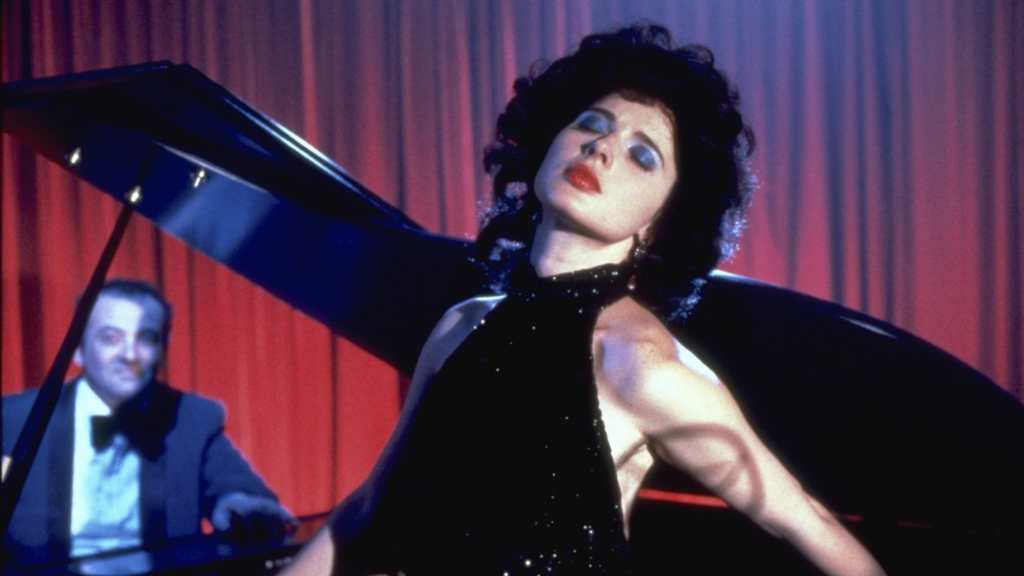
Blue Velvet follows Jeffrey (Kyle MacLachlan) who has returned home after his father has had a stroke. On the way home from the hospital visiting his father, he finds a severed ear in a field. Mortified but also curious, he takes it to local detective, John Williams (George Dickerson). The detective’s daughter, Sandy (Laura Dern), is also fascinated and thinks it may be related to the mysterious nightclub singer called Dorothy Vallens (Isabella Rossellini). After sneaking into her apartment whilst she is singing at the club, Jeffrey gets more than he bargained for when Dorothy comes home and is treated as a sexual slave by a disturbing man called Frank (Dennis Hopper). Jeffrey finds himself trapped in a dark and twisted conspiracy that he finds it very difficult to escape from.
The number one thing when approaching Lynch films is how they make you feel and this is perhaps the most visceral my reactions have been when watching any of his films thus far. This is a deeply disturbing film about sexual depravity and the corruption of innocence, all delivered under a surrealist blanket that makes it both feel like a dream and a nightmare. Chronologically, this was easily the most graphic and also the darkest film Lynch had released and it really showed him having full creative control could lead to some dark places. But that feeling that this film gives you is one unlike any film can give. It is hard to what that feeling is but it stems from the film’s use of voyeurism. This film does not feel like it is meant to be watched. In fact, it feels very dirty and wrong to do so, like you are intruding. But the key metaphor to describe watching this sits within the film. When Jeffrey is sitting in the closet, watching Frank do unspeakable things to Dorothy, he is disgusted, terrified and disturbed. And yet even though he could probably get out of the situation after that initial act, he keeps falling further into the web of the conspiracy out of his own curiosity and intrigue. That perfectly represents the viewing experience. It is hard to watch and you almost do not want to but the storytelling is so involving that you have to see where it goes. It is hard for a film to be like this without losing its viewer completely but Lynch puts a spell on you with his surrealism and you simply cannot help but be strung along by him.
Essential to Blue Velvet‘s draw is definitely the performances. Of course, we have Lynch’s budding main man Kyle MacLachlan at the centre of it all and he is great at potraying this loss of innocence throughout. But here we also see the initial collaboration with Laura Dern, of whom Lynch would work with in quite a few of his later works. She was only 18 during this and she is one of the top performers, which is wonderful considering this was essentially her first big role. Selling that drive of a suburban girl wanting more excitement, she really knows when to switch her performance accordingly when Sandy gets more that she bargained for. Possibly the most memorable performances though are Dennis Hopper and Isabella Rossellini, both of which are drastically different from each other. Hopper is rage-filled and volatile, displaying an unpredictable performance. Jeffrey’s closet scene watching him is so memorable for how quickly Hopper can switch from this angry beast to a crying baby and it is perhaps one of the most disturbing performances I have seen. Rossellini has to respond to all that Hopper does too and she does that brilliantly, showing a broken woman, full of vunerability. Her singing the titular song ‘Blue Velvet’, is both haunting and beautiful, depending on when it is shown throughout. Lynch brings out all of these massively different performances with his direction and they really make the film.
Blue Velvet is an excellent showcase of Lynch’s nature as an auteur, demonstrating all the things that people love about him and yet also the reasons people avoid his films. The content of this film is a lot to deal with, for what it directly shows the audience and what it hides underneath the surface. It will not work for many but those that fall under Lynch’s surrealist spell casted here are in for a rich story that you cannot help but push through. Lynch used an ear as the thing that Jeffrey finds because it acts as a window to the mind and that is the perfect summary of the Lynchian blueprint. What we see is strange and provocative in his filmography, but it is never done without purpose.


 Screen Addict
Leave a comment