Hideo Kojima is a video game creative legend for a reason. His unique stamp on the industry has been felt for nearly 40 years now, with his first stab at full direction being on the original Metal Gear in 1987. Though full of his own kooky Kojima-isms, clearly seeing how much he can get away with, he has always had a respect for the games medium. In his later career, his connection to cinema has also been very apparent in his work and he has been anything but subtle about his rubbing of shoulders with actors and directors. His connection with the legendary Guillermo del Toro famously almost spawned a new Silent Hill game, but Kojima’s difficulties with Konami put a spanner in the works. The original Death Stranding came to pass instead with del Toro recommending Norman Reedus for the main role. Collaborating with the likes of Léa Seydoux and Margaret Qualley, in the supporting cast, it seemed to be one of the first big jumps to connect the two worlds of cinema and gaming, to fuse them into one experience. How poetic that a game about connecting the world and creating literal bridges between communities could do that. Death Stranding was not everybody’s cup of tea, due to its unique gameplay and Kojima’s creative juices overflowing with weirdness. But those that it clicked with, it was truly an experience like no other. Myself, I fell more towards the latter camp and it was truly a unique experience. Death Stranding 2: On the Beach has now released, 6 years later, and while it still captures that unique magic that the original did, some things hold it back from being the S-ranked package the original brought.
Death Stranding 2, once again puts you in the shoes of Sam (Norman Reedus), a retired porter that has settled down after connecting the UCA (United Cities of America) through the chiral network. He looks after Lou, his BB (Bridge Baby) from the first game and has now adopted them as his own child. 11 months after the end of the first game, Sam has become domesticated and comfortable, dedicating himself to Lou. However, old friend Fragile (Léa Seydoux) arrives, revealing she has established ‘Drawbridge’, a new company carrying on Bridges work on the UCA. She asks Sam to complete a task for her: bringing the chiral network to Mexico. Sam reluctantly takes the job but whilst he is out, an attack on his home makes the job more mountainous than he once thought. He is tasked to go through a plate gate, essentially a long distance teleporter across the chiralverse, and it brings him to Australia. There, he meets up with the crew of the DHV Magellan, helmed by Tarman (George Miller/Marty Rhone). Inhabited by BTs, that have evolved to see, and strange ghost mechs lead by Higgs (Troy Baker), Sam will have to reconnect Australia to combat the Death Stranding and bring the world closer to being united.
When I said about Kojima unsubtley towards rubbing shoulders with actors and directors, this game takes it to the next level. It is strange to have somebody like George Miller and then just have him voiced by someone else, making you think what the point Miller being there actually is. At least Norman Reedus, Léa Seydoux and now Elle Fanning and Shioli Kutsuna are actually present here, doing voice work and motion-capture. They definitely make there presence known too with some excellent performances, particularly from Seydoux. Whether it is Kojima’s skillful direction or the technical brilliance of the animation, cutscenes are a joy to watch. Even if you cannot get on with the gameplay, this is almost worth the price of admission alone for how good they are. It helps that the ensemble cast of characters makes them great too and that is also due to the quality of the writing. Whilst the first game was a very lonely experience, travelling the country mostly on your own with the odd interaction, this feels like a proper ensemble romp. To an extent, that can feel like a betrayal of the first game’s beauty and I would not take issue with anyone thinking this way. But coming back to rest in the DHV Magellan, getting that visit to your room by Fragile or Rainy (Shioli Kutsuna), it is a feeling of home that the broken world of Death Stranding arguably did need. Especially when you have the pure-evil craziness of Higgs and his mechs constantly attacking you, the refuge is always welcome. Thematically, this is what the game is going for. Having that home with those you love and those that you connect with, that is what you fight for, even if you might not realise it at first. It is not saying anything new but with Kojima’s strange and stumbling way of telling it, there is an infectious allure to it that truly makes you love this gang of misfits like a family.
Of course, the main thing to talk about is the traversal and how you will be delivering those all important packages to help connect Australia. You have a lot of gear from the first game, along with some new introductions. The APAS enhancements, for example, act as a skill tree that gives you abilities like weather detection or a gravity module for your backpack to stop things falling out. Unlike the first game, it seems to be much more forgiving when it comes to how diffcicult these deliveries are. Tripping and falling seems to be a much rarer occurrence, especially with the different skeletons, APAS enhancements and other gear you can get to make it even less likely. This is all provided you even choose to go on foot in the first place because if the vehicles exist, why would you even bother? The tri-cruiser is fast and efficient, as ever, and the pick-up offloader is practically a neccessity. When there are bigger capacity deliveries, you are all but forced to take a pick-up offloader or a floating carrier because you cannot carry it otherwise. And why would you choose the floating carrier when the pick-up offloader exists? It does not feel like they thought a lot of it through because using one of them is a viable strategy for every delivery. You can even equip it with high-traction tires for scaling the snowy mountains so there is no need for any other bit of kit when delivering. You barely even need to make roads anymore as there will always be a route you can take. This just makes the game repetitive and sometimes boring when doing deliveries, because there is no real jeopardy compared to the first game. It is still fun and satisfying to complete these deliveries, especially when riding the awesome coffin board. But do not expect it to challenge you and make you think about your path like the first game does.
The other element of the game, and what a lot of the gear is now made for, is combat. In the original game, there was very little combat and it was only really used in select story moments or just against the odd bandit. In this sequel, there is much more combat and that is a fundamental problem, especially when it is not even very good. You can get so many different weapons in this game like assault rifles, machine guns, rocket launchers, all with different ranks and levels. These were present in the original but not very often, nor very early on in the game. You get weapons and grenades from the start and they just make you feel invincible. BTs, the main threat of traversal in the original, take no real focus or stealth to get around them because you can just gun them down if they get close. In actual firefights with mechs or survivalists, the gunplay is so safe and standard. The enemy AI is stupid so all you need to do is stand out in the open and gun enemies down as they come flooding to you. The only part of combat that is really enjoyable are the boss fights. Although very standard and a typical matter of shooting the weak points until they die, the set piece thrill of it overtakes that and makes them good fun. Combat is this game is not bad; it is functional enough and the slo-mo effect when getting a kill is satisfying. But instead of using it as a pacing mechanic in the original, it is a fully fledged aspect of the game and if you are going to make that jump, functionality is the bare minimum.
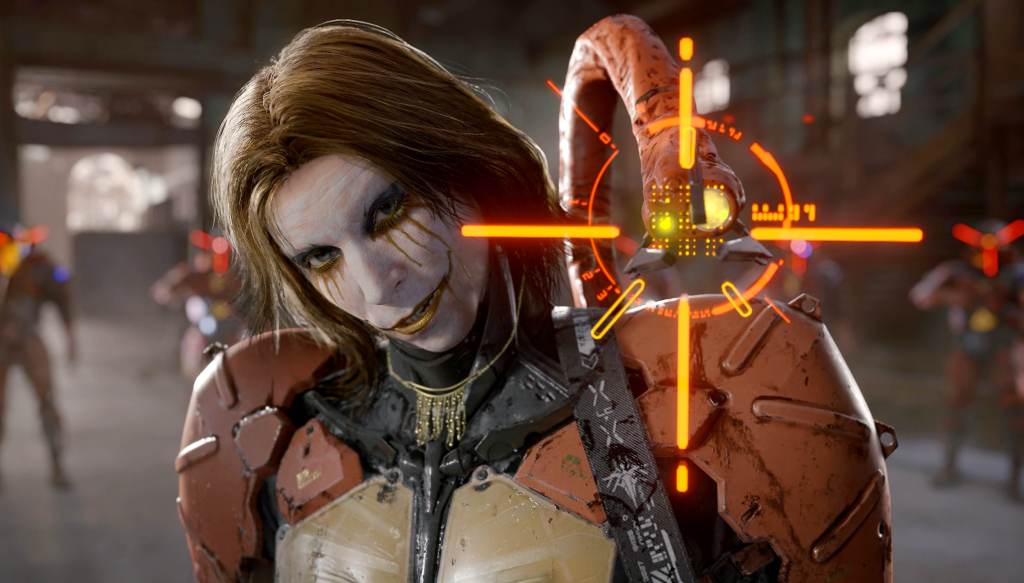
With some brilliant writing, but a mixed-bag of gameplay quality, Death Stranding 2: On the Beach is still a good game. It is endlessly creative with its world and characters and that sort of weirdness is just classic Kojima that everybody loves. In what other game do you have Troy Baker wielding a lightning/flamethrower guitar with Joker makeup on after all? That writing and character work alone overtakes all for me and makes it worthwhile. I acknowledge that the lack of difficulty I felt was due to that malleable sandbox experience, but the first game still managed to have something difficult to overcome. Clearly, this sequel has been made to be a much more accessible gameplay experience, allowing the player to essentially roleplay their own difficulty as they see fit. I did not have to use the pick-up offroader so often, but it got the job done for me so there was no need to do anything different. Some people will enjoy that freedom but for me, I needed something more concise, more akin to the first game. That being said, your own mileage may vary. Even if there were some aspects that did not work for me, this is a good game and it is simply an experience you have to try for yourself to come to your own conclusion.

 Screen Addict
Leave a comment