
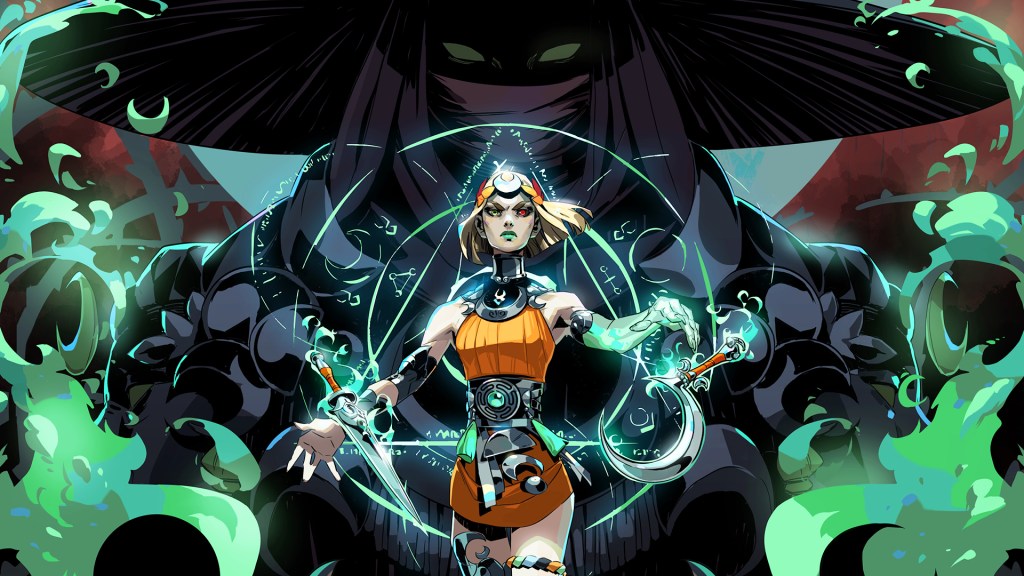
Developer Supergiant’s impeccable rogue-lite Hades was one of the heaviest hitters in the indie game scene, and it took the world by storm. With its intelligently told story, filtered through each run the player took through the underworld, it went constantly from strength to strength. Whether you were soaking up its excellent combat, well-told story, or its fantastic atmosphere, there was a lot to love with this great title. For someone like me who loves a bit of good Greek mythology, its setting was another massive strength, offering a different take on the gods and monsters of the myths, whilst giving plenty of trickling details that those well-versed will pick up. Perhaps its biggest strength, and why I still play a run every now and again, is its moreish and addictive rogue-lite gameplay loop. Taking rogue-like elements like permadeath and learning as you go, but throwing the player a bone with its slow filtering of new powers and permanent upgrades allows the player to slowly get better, with a perfect pace of progression. I love the original, and while its more reserved narrative is not for me, everything else is pretty much perfect. So how do you make a sequel to a game like that? Well, Supergiant has finally released Hades II, coming out of its early access period, and it takes everything brilliant about the first game and just gives you more of it.
Set a while after the original, Hades II follows Melinoë, the sister of the previous protagonist, Zagreus, and the daughter of Hades. Titan of time, Chronos, has captured Hades, Zagreus, and Persphone, as revenge for being slain long ago. Luckily, the witch Hecate managed to escape with Melinoë and keep her safe in the crossroads of Erebus, where the witch has her hovel. She raises Melinoë with one main goal in mind: to kill Chronos and save her family, who were imprisoned long ago. Each night, you are to descend further into the underworld, with the main goal of getting to Tartarus, where Chronos sits upon Hades’ throne, surrounded by the golden sands of time. However, during this quest, word comes from Olympus of a threat to the surface world at the same time. Torn between two different quests, you must descend but also ascend to the heights of Olympus, quelling each threat, which may be connected to one another more than you might originally think. Of course, you will not be alone, as the gods have your back. Bestowing boons of great power to enhance your powerful weapons arsenal and magic, you must use different combinations of power, aiming to find the most effective way to carve through your enemies and reach your goals.
Hack and slash games are known for having some of the flashiest combat, and yet also the most tightly-knit and fine-tuned. Like its predecessor, Hades II follows suit for this and gives some of the most diverse and satisfying combat of the year. If you do not know already, Hades II‘s rogue-lite design makes players go on a run and build themselves to be as strong as possible, through taking boons from the gods. These boons can add status effects to your weapons, make them do more damage, and much more. There are six weapons that Melinoë can use, and they are all quite different. All of them can be upgraded and even transformed completely to fit a completely different playstyle. For example, I love using the Sister Blades with the Aspect of Melinoë upgrade, as its bonus backstab damage allows me to prioritise staying behind bosses for maximum damage, also acquiring any boons that may deal with crowd control to cover all bases. Each night, a certain weapon will gain you more bones, which can be used to buy permanent upgrades. This makes you more inclined to use the other weapons and try to find a go-to build with them that works for you. It certainly helps that they are all incredible fun to use, so this is never a chore. As Melinoë is a witch, she can use magic, and that is reflected in both her casting and omega abilities. Casts are a part of your moveset that creates an area where enemies are slowed, but this can also cause damage when accepting boons. These casts can be charged up with the magic gauge to throw a projectile that corresponds to the boon you have accepted. This magic gauge can also be used to charge up normal attacks and special attacks, too, which can result in devastating abilities if used properly. I do not use these as much as I thought I would, but I appreciate that they are there, particularly for those who like rocking a mage in games. Ultimately, it is just another one of the amazing pieces of this overall combat offering. It is so satisfying to get a build that works, allowing you to tear through enemies. It was brilliant in the first game, and it is somehow even better here, due to the amount of diversity at your disposal. You will definitely need all this room for adaptation, though, because this game is much more difficult than the first, throwing everything at you, especially on the surface run. Still, that just makes it all the more satisfying to master and overcome, which is difficulty done right.
When taking a break from the combat, you arrive back at the crossroads, where there is so much to do, all with the goal of making you succeed in future runs. There are many different characters to interact with, including Hecate herself, who will often offer bits of wisdom. These interactions with characters form the framework of the story, and it is always interesting to see their opinions on each development you have. The main change here from the original is the massive cauldron in the middle of the crossroads that allows you to perform incantations. These advance the story, add new things to the crossroads, but most importantly, they give you things you need to survive underground or at the surface. In order to perform these, you need the necessary materials to do so, which can be harvested from your travels. They are similar to requisitions in the first game, but there is much more of a reliance on them, and sometimes you will do a run purely to get certain materials. It can get slightly frustrating to have a constant, long list of incantations to complete, but it is very satisfying when you actually complete them. The other important new thing in the crossroads is the arcana system. These are cards that give you lots of different bonuses that can dramatically change each run for you. Using the different currencies you have acquired on your travels, you can buy new cards and raise your total arcana capacity to be able to use them. The capacity is the kicker here, because, of course, you cannot have all of these quite crucial abilities. For example, one gives you lots more gold when starting the run, one grants a revive on death, and these cards can be upgraded to be even more powerful. This just adds to the build craft, and if you do not like your arcana setup, you can completely change your setup to try and prioritise something else. So much of this game is dedicated to giving a natural progression that is not shoved down your throat or too much at one time, and the crossroads is the best representation of that. It starts off pretty quiet, but the further you delve and the more incantations you perform, the more a routine starts to form, and it is always exciting to come back and see what is next, even if you will have just died.
Hades II is brilliant and just as good as the first game. It has a lot more going on, with what feels like double the amount of content to plough through, and so much more diversity when it comes to builds. It is literally endless fun with how much there is to experiment with in combat, and that alone makes this worth playing. If you have not tried the first game, try both of these games because there are not many games that are as unabashed fun as this. Whilst again, the more reserved story does not float my boat as well, I can appreciate its attention to its narrative structure. Finishing a run and coming back to get some more conversations is a solid and interesting way to tell a story, but it does leave me less engaged than I would like. Still, this does not hold the game back even a little bit, as what I come to these games for is the stellar gameplay it has to offer. It does that perfectly and has a decent enough story running through it to give some sort of meaning to all that hacking and slashing.


 Screen Addict
Leave a comment