
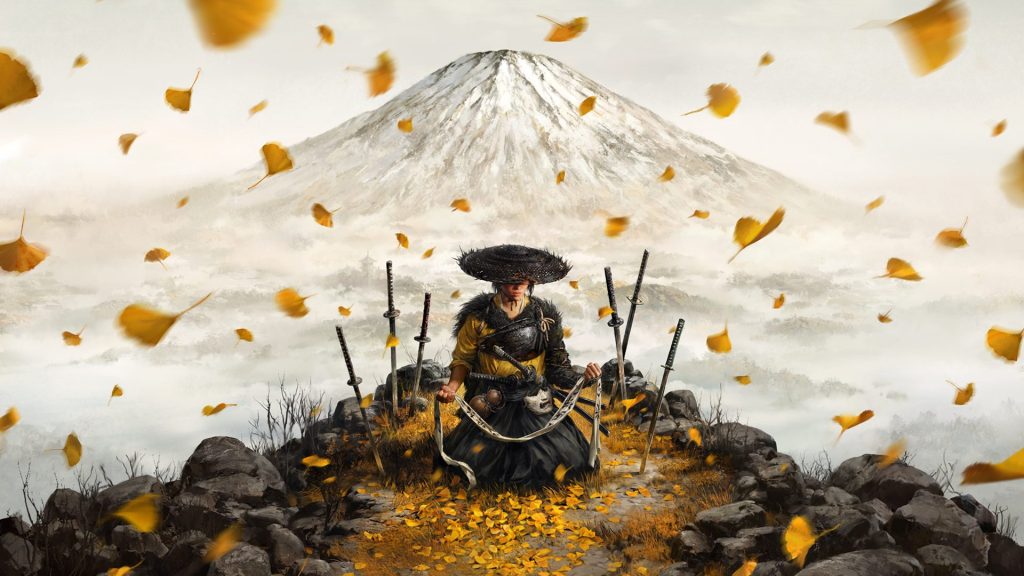
Back in 2020, Ghost of Tsushima took the world by storm, achieving worldwide acclaim for its incredible rendition of a Samurai story. Developed by Sucker Punch, famously makers of the Sly Cooper and Infamous series, they brought a realistic approach to their more fantastical library. Set in the Kamakura period of Japanese history, with the very real backdrop of the 1274 Mongol invasion, it placed players in the shoes of Jin Sakai. Showing the arrival of the Mongol fleet and the ensuing chaos, including the fall of Clan Sakai, it was a very character-focused story on Jin, dealing with the devastation whilst grappling with his Samurai code. His transformation into the ghost is the most gripping aspect, using the techniques of a shinobi way ahead of its time, and going against the honor and Samurai code that his uncle, Lord Shimura, preaches. Above all, the game’s clear love letter to Samurai cinema, particularly the work of the legendary Kurosawa, was its most defined triumph. Walking around, playing your flute whilst the wind rushes by, only to enter a quickdraw standoff where you kill your enemy in one swing; it was the stuff of dreams for any Kurosawa fans. Now five years later, Sucker Punch has released its follow-up, Ghost of Yōtei, which clearly, right from the off, aims to replicate its predecessor’s success. It has a very similar seamless open-world feel, it’s visually breathtaking, and the combat is fantastic. But there does feel like there is something missing, particularly where innovation is concerned. Whilst this is a good game, it suffers from feeling very safe and all too familiar when compared with Ghost of Tsushima, especially when that game’s story was much more interesting.
Set at the beginning of the Japanese Edo period in 1603, the Sengoku period, a time of brutal war, is coming to a close. Fresh from the Battle of Sekigahara, which saw the Tokugawa Shogunate establish control over the mainland, our protagonist, Atsu, has journeyed north to her home in Ezo (now known as Hokkaido). Living as a mercenary and a wanderer, she has come back to her home for a haunting reason. When she was younger, a man known as Saito and his group of six masked associates massacred her family and pinned her to the burning ginkgo tree outside her homestead. Now seasoned from war and hearing of Saito’s growing influence over the land, spewing about becoming ‘Shogun of the North’, Atsu has come to try and settle her soul from survivor’s guilt through vengeance. Tearing through anyone who gets in her way, as Atsu, you will earn the reputation of the ‘Onryō’, which means ‘vengeful spirit’ or ‘ghost’. Though the Yōtei Six are the goal, you do also have the whole of Ezo and its different regions to explore. You will meet the indigenous people of the Ainu, helping with their everyday problems, mingle with the Matsumae Samurai Clan that is struggling to keep hold of Ezo, and slowly take back control from Saito’s growing empire. Unlike Jin, Atsu is no Samurai, with no code to hold her back from taking revenge and spilling the Yōtei Six’s blood.
The setting of Ezo and Ghost of Yōtei‘s world design will be a big draw for many, as I highly doubt you will find a more beautiful-looking experience this year. When you get a big-budget Sony flagship game like this, a cinematic and visual delight is usually on the menu, and yet it still manages to leave your mouth agape. Many cite Ghost of Tsushima‘s intro title drop as one of the most cinematic and goosebump-inducing moments in recent video game memory, and this almost tops it. Galloping on your horse through the trees, only for it to open up to vibrant colours, glistening sunlight, and the magnificent Mount Yōtei on the horizon; it is a piece of art that will leave you struggling to catch your breath. It helps that everything to do in this world is almost as pleasing as how good it looks. Returning from the first game is the little bird that is both a blessing and a curse, tweeting and flapping about to lead you to yet another distraction from taking revenge. Painting the scenery, why not? A bamboo strike to increase your focus points, absolutely. A huge camp full of what feels like endless enemies to get a skill point, well, it’s definitely something to do. These activities, apart from the camps, are quick and easy distractions, as opposed to long side-endeavours that become tedious to continuously polish off. The same cannot be said for the actual side-quests, which do feel like a chore, but thankfully, they seem few and far between. The smaller activities yield small but satisfactory rewards, like the focus increase or perhaps even some cosmetics. It is not much, but it makes sense for the magnitude of the task. However, the unshakeable feeling is that we have seen this before with the first game, and it does not improve on that formula to any degree. When making a sequel, there has to be some justification for why this exists. Any sort of innovation or new systems to make us swoon, but there is nothing at all that feels like a real misfire. It makes the experience pleasant at first, though that feeling wears off rather quickly when you realise you are essentially playing the first game again, just with a prettier coat of paint.
The lack of innovation and imagination of Ghost of Yōtei is most reflected in its narrative, which is not by any means bad, but a noticeable step down from its predecessor. The key to Ghost of Tsushima‘s great story was the central conflict that Jin has within himself throughout, choosing whether to abandon his honour as a samurai to match the Mongol’s dirty tactics, or to keep in line to please his uncle, whom he has overwhelming respect for. In Ghost of Yōtei, there is no real central conflict, at least not at first. Atsu is sure of herself, so much so that it is quite badass, in fairness. She has moments of tenderness, but mostly she is full of brawn and will stop at nothing in her quest for vengeance. That starts to loosen, later in the game, when circumstances change and she changes practically on a swivel. It becomes the typical ‘revenge is bad’ narrative strand, and by this point, that feels a bit worn down. Particularly when the likes of Sony’s own The Last of Us Part II handle this subject with so many layers and nuances, this pales in comparison and makes it a bit flat as an overarching theme. The characters do manage to uplift this to an extent, with a small cast that are well defined and certainly enhance some of the more overdone elements. Particularly, Atsu’s relationship with Jubei carries a lot of weight, responding very differently to their own personal tragedies, but both in ways that feel human. It was their story that managed to save some of the more basic threads towards the end, and I came away satisfied purely from their story. I did not dislike this story due to things like this, but I did find it a tad undercooked compared to the more prestige feel we usually get in these Sony narrative-led experiences.
Combat and progression are still highlights in Ghost of Yōtei as they were in Tsushima, really committing to that Samurai fantasy in every way possible. However, the main change here is that Atsu is no Samurai and is rather a jack of all trades when it comes to weapons. Instead of the stances in the first game, Atsu has multiple weapon types she can use, both melee and ranged. This includes the normal katana, two katanas, a kurasigama, bows, and even guns now, thanks to the time period change. To get these, there are multiple side quests where you will go to a weapon master and ask them to train you. These quests are great because they are all very likeable and have interesting stories to tell, but mostly because you essentially perform training montages where you feel yourself and Atsu improving. There is a moment when training for the dual katana that asks you to do a bamboo strike with your left hand, purposely making the different button prompts easier and less cackhanded the more Atsu trains. In this moment, you feel a strange symbiosis with her, and it is genius. Actually getting into combat is a rush that feels fantastic every single time. It is simple blocking and parrying with a few special moves thrown into the mix, but the different weapons make it feel somehow better than the first game. The feedback response you get from a kill with a satisfying slash and a spurt of blood; it feels electric. This is only made better when getting more skill points from altars of reflection, which add new moves and capabilities to make you feel that progress in action. The weapons and armour upgrades are a bit lacklustre and do not offer much, but when the foundations of the combat are this good, it hardly matters.
Ghost of Yōtei is not full of that razor-sharp energy and innovation that Sony usually prides itself on with its big first-party titles, but that does not make it a miss by any stretch. In fact, I feel that if you love the first game and are just wanting a bit more of it, you will be right at home here and will most likely love it. When I am committing my time to reviewing a game like this, though, I do not want a rehash of a game I have already played because it feels like a bit of a cop-out. Everything you get out of this game, you will get out of its predecessor, and that game even has a great story to go with it, too. The combat is more polished and fun, it is somehow prettier than an already beautiful game, and it definitely provides that Samurai or wandering Ronin fantasy on another level. But it has no cutting edge to sell itself as a must-play sequel, and whilst I feel like what’s here is the makings of a good game, it just about falls short of being a great one.


 Screen Addict
Leave a comment