
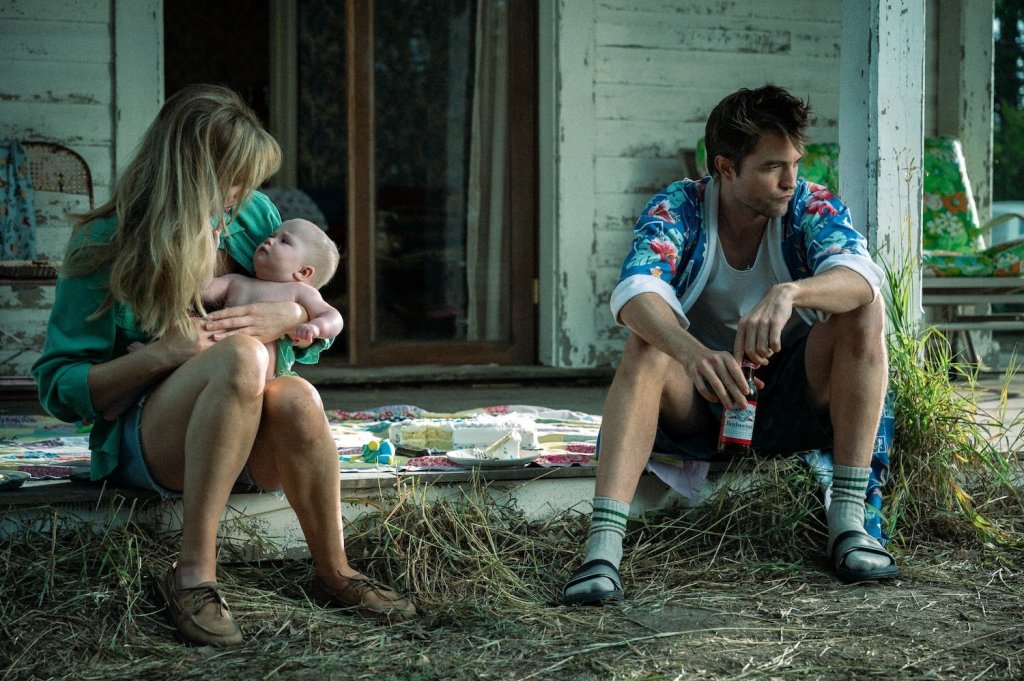
Lynne Ramsay is recognised as one of the great modern British directors. A true examiner of humanity and our psyche, she has made many hits, such as You Were Never Really Here (2017) and We Need to Talk About Kevin (2011). Dealing with many complicated protagonists and characters with a lot going on under the surface, it is clear she has a talent for interpreting those complicated feelings through the vessel of cinema. For example, You Were Never Really Here stars Joaquin Phoenix as a man dealing with severe PTSD. The narrative plays out in a very shattered manner, blurring lines between what is a figment of his own paranoia and what is reality. Though a film not for everyone, it certainly worked for a lot of people due to her care to try and understand such a complicated strand of humanity. When it comes to Die My Love by Ariana Harwicz, this is a story that naturally translates to the themes and types of characters Ramsay has had to deal with before. Even more similarly, the story deals with themes of post-partum depression, a thread Ramsay explored with We Need to Talk About Kevin. However, this film did not come about through Ramsay. Producer (and apparently quite a successful director himself) Martin Scorsese actually sent this book to Jennifer Lawrence, envisioning her in the lead role. Lawrence knew that Ramsay would be write for the job, so in addition to getting her to write it, she convinced her to attach herself as director also. Enticing her with the idea of a ‘fucked-up love story’ rather than a retread of her past ideas, Ramsay grew enthusiastic about the project, and it is clear to see that shine through in the final product. This is a film made with a lot of passion, and it is oozing with many different themes and talking points that make this such a dense and interesting package to think about. I was already looking forward to this because of the talent attached to it, but even then, it smashed my expectations.
Die My Love follows Grace (Jennifer Lawrence) and Jackson (Robert Pattinson), a young couple who have just moved from New York into a countryside house, owned by Jackson’s late uncle. Excited to be secluded and together alone, they think of all the different things they can do together. They dance to rock music at full blast, have sex pretty much anywhere they can, and enjoy the freedom to a degree that they have never really experienced. After enjoying themselves, though, the only natural next step was to have a baby and start a family in their new home. Once the baby is born, they decide not to name him just yet, neither of them feeling a true attachment that they can fully name. Grace loves and cares for the baby, but more so out of duty than of an overwhelming desire to care and love him, slowly starting to develop post-partum depression. Her moods become more erratic and unpredictable, leaving Jackson feeling helpless. This worsens due to Jackson’s constant absence from her while working, often taking long trips that leave Grace alone with her thoughts and the baby, much longer than she can handle. Their infrequent amounts of intimacy also frustrate Grace, especially because of Jackson’s horribly kept secret of sleeping with other women during work hours. All these many stresses build and build, making Grace and Jackson’s relationship hang in the balance, as well as Grace’s own sanity, which slowly slips away.
Part of the reason this film is so gripping is how many different elements it throws in as a part of Grace’s destabilising mental state. It fully dissects postpartum depression, but also the multiple different problems that come as a result of that, too. Perhaps the most noticeably explored element is the feeling of entrapment that Grace feels, and that is at the core of many of the problems she faces. That duty she has as a mother is something she is not used to, particularly since moving to the country was meant to be a true escape for both her and Jackson. Having such wide open spaces around them and yet being stuck having to care for her baby is one of the things that gets to her most, and it leaves her tremendously frustrated. This also translates into her lack of sexual fulfillment, too, being a slave to her commitment to Jackson, and yet getting nothing out of it to satisfy her. Often, there is a biker (LaKeith Stanfield) who drives past the house and seems to watch Grace. She is constantly intrigued by him, feeling a pull towards him also, and this represents her fantasies of sexual freedom that she has to repress out of loyalty to Jackson. As she is caged by her duties and commitments, it only makes her more unstable. There are so many different threads relating to her free spirit that has been caged, surrounding things like animalistic nature and a primal need to be free, and it is all so interesting. It is so densely packed with thoughtful conversations that make this story so engaging.
On the technical side of things, Die My Love succeeds brilliantly too, perfectly complementing its ace screenplay with some excellent filmmaking. To accentuate a lot of its ideas, the cinematography and editing both do a lot of heavy lifting. Lots of close-up shots of Grace relay that claustrophobic feeling she has at home to the audience, and it allows us to more closely examine her descent, too. Many of the shots of Grace, particularly outside, are done with a grainy and often blurry filter, and this works for many reasons. Firstly, it matches her psyche very well, which often can be blurry itself and hard to read, snapping at any moment. But the fact that this is used primarily outside paints a very alien landscape for the freedom that she desires. It works the same way as being kept in the dark for so long, emerging into the light only to be almost blinded by it. Grace is so cooped up and used to being at home mothering, straying too far outside sets this kind of response off in her. All of these stimuli, all of these different excellent filmmaking elements, with a character study this deep, none of it would be possible without Jennifer Lawrence. Thankfully, she smashes it out of the park with a performance full of range and constant commanding screen presence. Pattinson is also great, but Lawrence is truly a different beast. As said before, the passion given to this film really shines through, and that is epitomised by her performance, selling this as a proper passion project for her. Ramsay brings all of this film together with her veteran director skills, but Lawrence is so clearly at the centre of it all, and she deserves all the flowers she gets for this film.
Die My Love is a brilliant film that soars high as one of the year’s best, giving us a character study that constantly offers new ideas and interesting talking points. It is always a good sign when writing my reviews that I have to stop myself from dissecting it too much, because, of course, I want you to watch it for yourself and have your own reading of it. But this kind of film lends itself to that form of critique; to really pull this film apart and examine all those little details that make this so deeply interesting. It is not a film for everyone because it is quite slow, and towards the end, it does perhaps go on too long. But even still, its slow pace feels methodical and necessary, feeling consistent throughout in a way that is very important to the core of why this film works so well. If any of this sounds interesting to you, I highly recommend that you seek this out, if nothing else but to see Jennifer Lawrence give one of the best performances of the year.



 Screen Addict
Leave a comment