
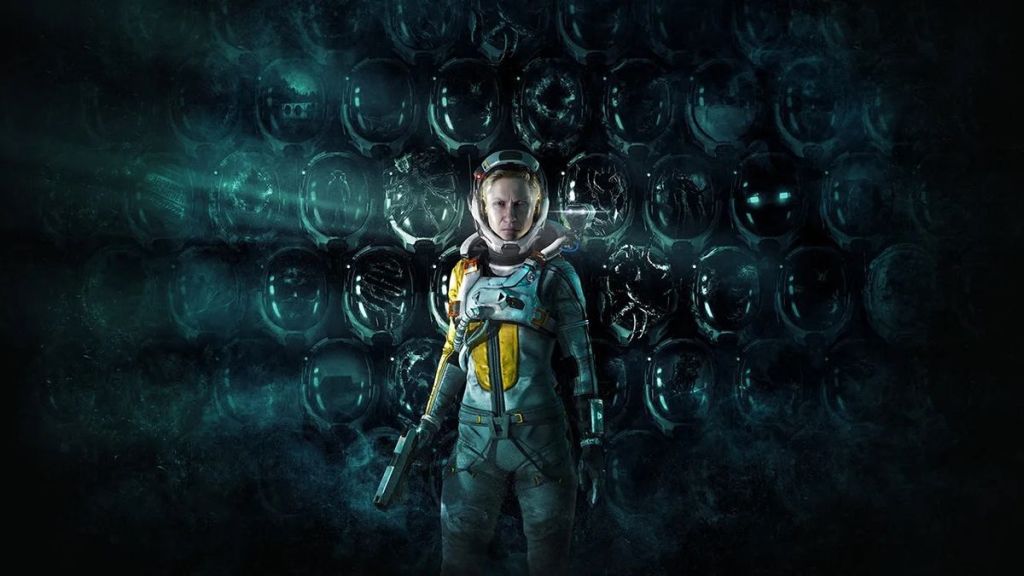
Sony first-party studio Housemarque has always been a relatively small-time studio, focused on a very specific niche of gaming. Specialising in sci-fi ‘shoot-em-ups’, such as Alienation or Nex Machina, they certainly know how to overwhelm you with lots of things to kill. A ‘bullet hell’ is a sub-genre of the shoot-em-up genre, and like many game genre titles, it is very literal and obvious as to what that genre might entail. Going back to much more arcade and retro experiences in the 90s, a lot of the older examples of these games focused on a vertical approach, with fire being rained down upon you and you having to weave your way through the bullets, whilst firing off projectiles of your own. 1993’s Batsugun is often cited as the genre’s founder, and it has only grown crazier and more hellish from there. Housemarque’s own Resogun was seen as a massive innovation for the genre, crowned as a modern example of a bullet hell, utilising modern performance and cutting-edge effects to create a visual delight on-screen as you blast your way through enemies.
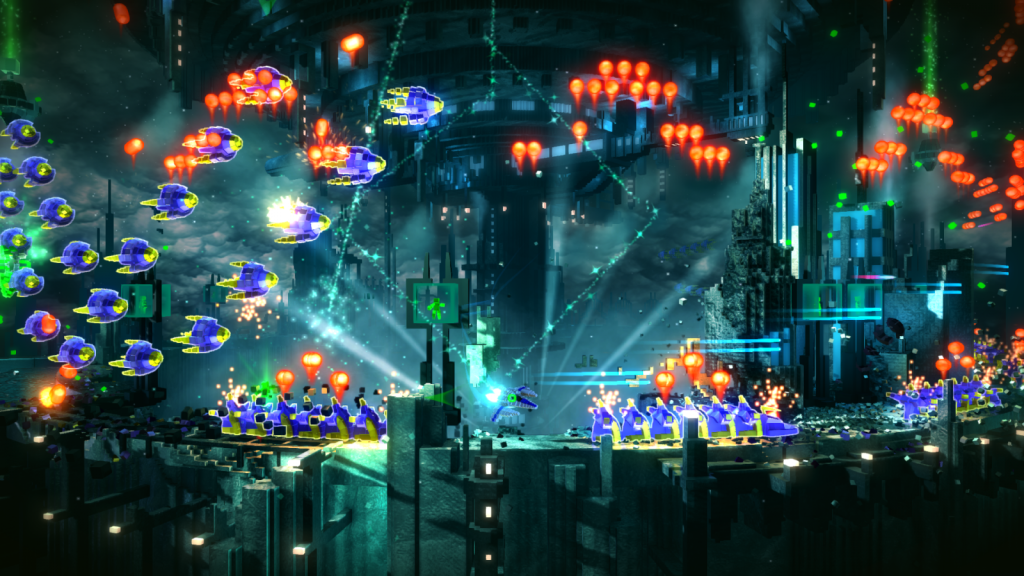
Its neon splatter of enemies will quickly overwhelm you, and you have to dodge your way through all this fire to survive. Though daunting to look at, playing games like this really allows you to get to grips with it quicker than you think, with ducking and weaving bullets becoming second nature in seconds. When I picked up Returnal, Housemarque’s latest released bullet hell, I too was daunted by its overwhelming enemy fire, and did not think I would be able to crack it. However, like some of my favourite games, the challenge makes the victory that much sweeter, and it is hard to emphasise just how good it feels to crack Returnal. With Housemarque releasing Saros in just over a month, a spiritual successor to Returnal, let us look back and see what made that game so much fun.
Returnal puts you in the shoes of Selene, a woman escaping her past by going on a scouting mission to the planet Atropos. A strange signal named the ‘White Shadow’ is somehow beckoning her, drawing her to the planet with a lingering familiarity surrounding it. As her ship comes into orbit, it malfunctions, sending the ship spiralling out of control and crashing on the bizarre planet. Crawling from the wreckage of the ship, you do not have much choice but to move forward and find the source of that signal. As you investigate the planet’s surface, equipped only with your pistol and spacesuit, hostile alien fauna will not be too pleased with your presence. Inevitably, they will kill you, but that is very much expected, and, with the likes of what you are fighting, also completely fair enough. Strangely, death seems to bring Selene back to the point of her waking up in her crashed ship, and it becomes very clear that she is stuck in a time loop. Though a horrible and scary situation, this can be used to your advantage so you can explore the planet and get good at fighting back at the beasts that threaten you. Using rogue-lite mechanics, resetting you every time, but allowing for some meta-progression, you can power through and find the source of the signal, and hopefully something that will break the loop.
Right from the jump, one of the things that is so appealing about Returnal is its visual palette and atmosphere, demonstrating true talent from Housemarque in making a world that feels truly alien. Though Atropos’ many biomes have some qualities reminiscent of Earth, its various ruins and fauna feel anything but, and really sell the idea that you are on a world that you are not welcome on. Ruins, in particular, are all rather banal, purely in the sense that they are just made of stone, but the multiple runes and inscriptions are a light touch that works brilliantly. Soaring statues that tower above you detail horrors that you have not even met, and yet they certainly make you very fearful of the possibility that you might. It is certainly very reminiscent of Alien, specifically when they land on LV-426, seeing the otherworldly ship, the space jockey, and, of course, the sea of alien eggs. There is a feeling of dread created in that scene that you feel through all the new areas you explore in Returnal. Atropos’ creatures contribute to this, with their horrible tentacles and bright colours spelling danger for you if you get too close. Rather than their look, though, it is the sounds you hear from them, the planet, and the accompanying soundtrack that create this horrible, pit-of-your-stomach kind of feeling. The roars of the monsters and the alien synth beats of the score make you feel very unwelcome and certainly in danger. It may be the enemies that do not make any noise, though, that are the most disturbing, watching you from a distance and unleashing their wrath on you as if you were just an insect to them.
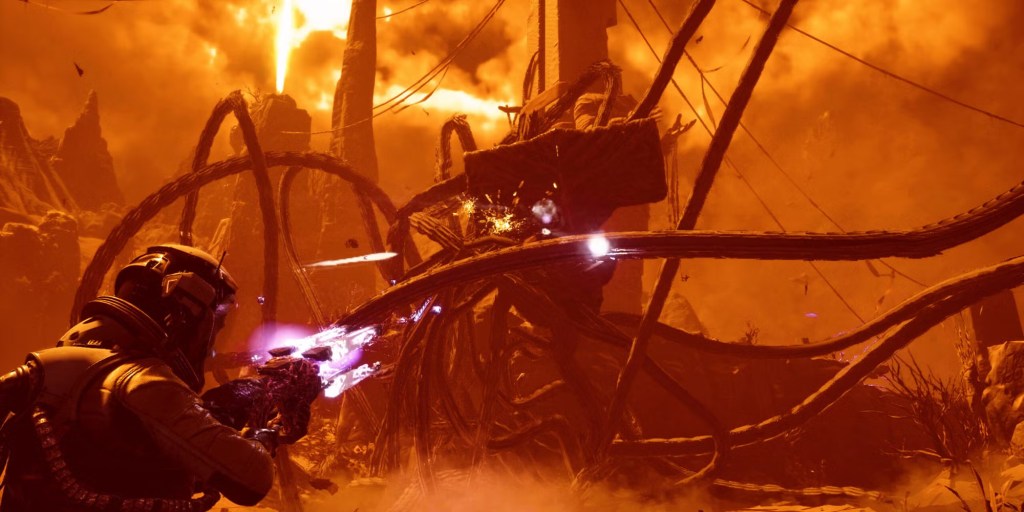
Seeing these things in the distance, staring at you, is terrifying at first, but that horror soon subsides when you realise you have to survive it, beat it even, if you want to stand any chance of escaping the planet. These enemies and the world they live in may seem immense, but the beauty of this game is learning how to beat them, and it becoming pure muscle memory to do so.
Bullet hell games are often associated with fast, snappy gameplay that does not let up, rarely giving you a chance to breathe. Returnal is no different and is certainly tough-as-nails to get the hang of. Its progression of ramped-up difficulty is certainly well-designed in a way that lets you get better without throwing you in the deep end straight away. Though it may seem like the bare minimum for the game to get progressively harder, the curve feels natural throughout the levels themselves, too, meaning there are no sudden jolts where you feel completely helpless. Well-paced difficulty is very important because if somebody comes across a massive spike that they feel they have no chance of overcoming, they will just quit, and so keeping that curve natural lowers the possibility of this. Due to the rogue-lite approach, with constant resets, it can get frustrating, even still, but that just generates a drive to get better. After all, when dying and having to move through those lower-level areas again, you will eventually cake-walk them because your knowledge of the game becomes so strong. You can stare down horrors like it is nothing, and zip about taking every advantage you know of.
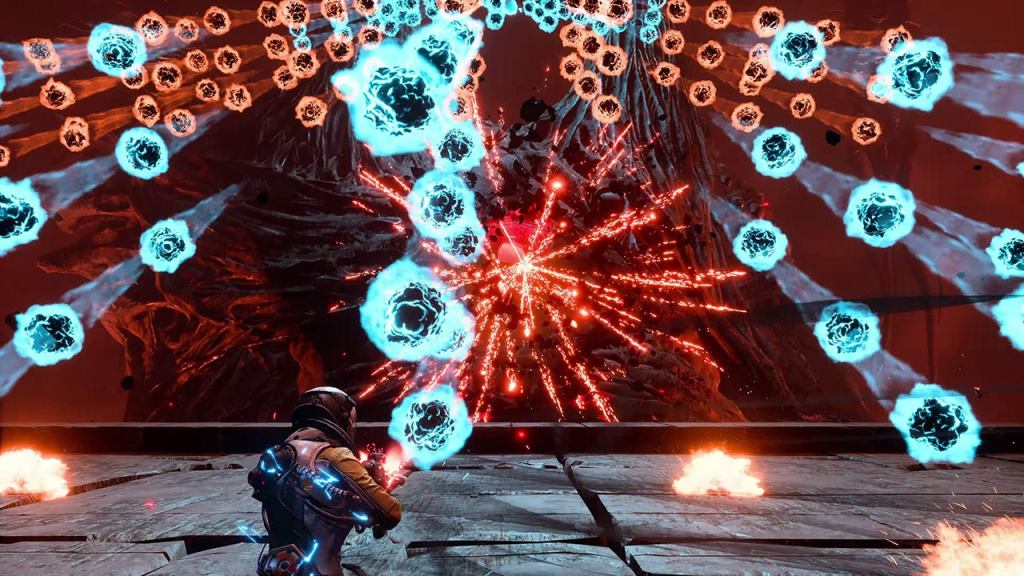
Know not to stand near that enemy in particular because his melee is devastating, know to clear the turrets as soon as possible; everything becomes methodical in a rewarding way by making you feel like you have mastered the terrain like a predator. Powering through the frustration is also made much easier by how fun the game is just to play. Shooting feels excellent, with so many different weapons to choose from that are all viable options throughout the game. It is not talked about much these days, but the PlayStation DualSense controller really is exceptional, and this is perhaps my favourite utilisation of it. Feedback from weapons is felt strongly in your hands, as is everything around you, as you traverse the environment. Adding a secondary ability to your weapon, differentiated from the primary by pulling down the trigger more, makes you feel so cool, and it is hard to describe that without experiencing it yourself. In terms of the actual rogue-lite elements, like build-craft, this certainly is not the strongest case of it, and it can feel secondary to the goal of just getting a good enough gun to use, but it does still work well. I particularly love the risk-reward system of malignant items, needing to be cleansed with ether or just brute forced at the risk of suti malfunction. Every choice matters because you may miss out on good gear, but you are also at risk of essentially ruining your run. It can get annoying when you have done a fair few runs, but it is still a well-realised mechanic. As is pretty much every system in the game, with no real weak links. Everything is assembled to have such a nice ebb and flow, making you feel powerless and clueless one minute, but feel like you are really getting the hang of it the next, and that is very effective.
After replaying Returnal, it has certainly made me curious about how Saros will turn out and how similar it is going to be. Of course, I imagine the fundamentals will be the same, but particularly things like art direction and story interest me. While it certainly was not the highlight of the game, Returnal‘s fractured narrative does work for how the game itself is presented, with the time loop certainly making everything complicated and weird in the best way. Still, the thing that I have always looked fondly upon when thinking of Returnal is that exceptional gameplay design that is incredibly moreish and borderline addictive to master. If Saros can do that, with at least a competent story and some interesting art direction, I am sure it will be a big hit.
 Screen Addict
Leave a comment