
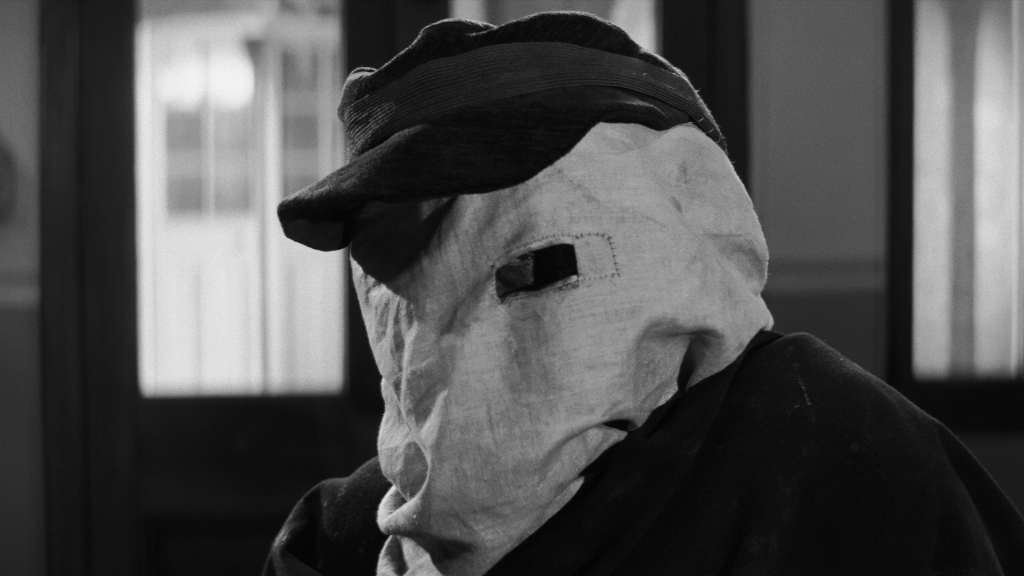
After the strangeness of Eraserhead and its varying critical response, there was the lingering feeling of what Lynch could do next. He was a small whisper throughout the industry and not everybody really knew who he was yet. Those that did though realised his capabilities and he started to get a bit of attention from them. Famous producer, Jonathan Sanger was optioning the script for The Elephant Man and he was showing it to Mel Brooks and his new production company Brooksfilms. It was Brooks’ assistant, Stuart Cornfeld, who recommended Lynch and thus Sanger met Lynch and was excited by his overflowing ideas. Brooks himself had never heard of him and yet after being screened Eraserhead, he was enthralled and gave his blessing for Lynch to direct.
And so The Elephant Man came into being by Lynch through a small whisper. This was his chance to really put himself on the map with a bigger budget and an interesting biographical concept that had only been done in a play three years prior. This biographical piece follows surgeon, Frederick Treeves (Anthony Hopkins) who comes across a ‘freak show’ in which there is an act called ‘the Elephant Man’. Treeves goes to see his horrible owner, Mr Bytes (Freddie Jones), and takes him to London hospital for medical examination. There he learns that this ‘freak’ was a man called John Merrick (John Hurt) that had a very unfortunate deformity. Through much encouragement from Treeves and the others at the hospital, Merrick starts to demonstrate his sophistication. However as he gains attention from those in higher society, Treeves starts to question the morality of the situation and whether he is doing the same thing Bytes did.
Even from its very surrealist opening detailing the death of Merrick’s mother, this is a much more straightforward film from Lynch, especially when pitted against Eraserhead. It is a biographical piece after all so people would flock to see it, meaning he could not go completely off the rails. However, there is a lot beneath the surface of this film concerning morality and human nature. Merrick is seen as much more than his looks so why should this be the thing that everybody focuses on? This is a man that can read and have intellectual conversations which is much than most people of that society could do. His looks do not define him and even if they are difficult to look at for some people, thta is not his fault. The build up to the iconic, ‘I am not an animal, I am a man’ scene is masterful because all of these elements have been put forward first previously to build to this resulting outburst. It is not saying anything new to call out the horrible freakshows of the time but they really were inhumane and exploitative of people who weren’t dealt the best hand. This is why the scenes of Merrick in high society do not feel the same way because even if they are there initially for his looks, Merrick constantly impresses in his intelligence. He proves people wrong and after not getting many wins in life, this is definitely one of them.
Treeves’ dilemma is potentially the most interesting because it is not in any way misplaced. Yes, he has essentially emancipated Merrick from a life of torture and exploitation but it is not a good look on him when those in high society initially treat him the same way. It does not really help him either way because even if he is just saying he wanted to save him, that too comes across as virtue signalling and attention seeking. Frankly though, it is clear that Merrick is much happier and he sees Treeves in a glowing light. This is what matters at the end of the day because in Treeves’ care, he flourishes talking to like-minded people, even if their initial wanting to see him comes out of curiosity for his condition. Treeves has made his life better because he is much happier as opposed to him being trapped and beaten by Bytes. Even if it may not look like it from afar, we see Treeves personally and know that his intentions are good and that is what matters.
Evidently, there is so much to say about this film’s writing and themes but its other aspects are equally as rich. Needless to say, the makeup on Hurt is fantastic and as good as today’s standards. Furthermore, how Hurt manages to act through all of that is even more impressive. It would have been very uncomfortable to constantly have on and he is clearly the star of this film. Hopkins as always is great as well and he perfectly delivers Treeves’ moral conflict but also his unflinching kindness to Merrick. The cinematography is stunning throughout too with perfect mood lighting and stellar shots. Finally, the edit is also great. Even if it does start slow, everything from then on is crisp and flows so well that the just over two hour runtime flies by. It is just an all around excellent film in every department.
Concerning how this fits into Lynch’s filmography, it is definitely one of his more restrained pieces. As previously mentioned, the surrealist elements are kept relatively low and this is an easy recommendation to anyone as a result, even if they are not familiar with Lynch. It still holds his identity but his own personal flair is definitely more absent in this than much of his later work. This does make a lot of sense since this is biographical and it would not be fair to make an absolute mockery of someobody who clearly went through a lot. It does capture Lynch’s enduring sense of empathy he puts into his films though, similarly to Eraserhead, and that is the main thing that makes this truly Lynchian. That aside, this is a fantastic film in its own right and it is an easy recommendation to anyone wanting to get into Lynch or just to see a great film.





Leave a Reply