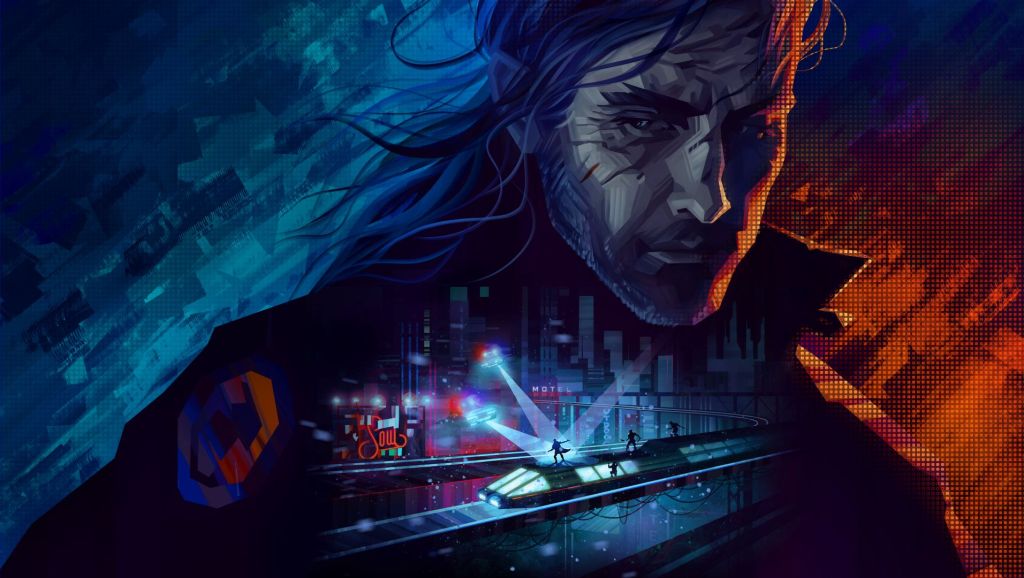
Though sci-fi has never been my genre of choice, cyberpunk aesthetics are an exception to that notion. Who needs space flicks when you can see what the corrupted minds of the future could potentially do to the very life that we lead now? With tech billionaires constantly trying to innovate and simulate professions, effectively ruining the job market and making people lazier as a result, what bleak future world may await us? What happens when normal people get hold of tech that we could only dream of, cybernetic enhancements potentially becoming the norm, and making all of us humans slowly turn into machines? These are questions posed by some of my favourite pieces of art, and I am sure it is not just me who finds it so interesting. The Deus Ex series (God rest its soul) was the absolute pinnacle of this particular moral aesthetic, asking all these questions whilst building a world that we are getting ever so closer to echoing. Even Ridley Scott’s Blade Runner, way back in 1982, had a fair few scary ideas that are becoming quite real now, even with the warning to the future that the film proposed in the first place. Cyberpunk 2077 is obviously the most recent phenomenon of its namesake aesthetic, and that too has those questions at its core, taking things even deeper at points, with one of the most expansive cyberpunk worlds we have seen in fiction. Replaced is a new cyberpunk action-adventure game, and it too asks similar questions about the world it has built, and it does so from the perspective of an AI itself. Though it brings nothing particularly new to its genre, Replaced offers an interesting enough sci-fi cyberpunk story, with some solid gameplay and a stellar art style to support it. Harkening back to the greats of its sub-genre, wearing its inspirations on its sleeve, this is definitely a game worthy of any cyberpunk fan’s attention.
Replaced sees you take control of Reach (Research Engine for Altering and Composing Humans), an AI with an obnoxiously long name that gets trapped in the body of its creator, Warren Marsh, during an accident at his lab. Though Marsh himself is dead, Reach assumes control of his body and essentially turns the body of his creator into a super-soldier. On the run from the authorities after the lab accident, Reach must leave the city and go into hiding. In an alternate cyberpunk 1980s US, where corporations and AI essentially run the world above the government, there is a colossal class divide that sees many cast away from any semblance of polite society. Those sat near the bottom of the pyramid are those whom Reach finds himself in the company of, hiding amongst them on the outskirts of Phoenix City. Even in such a destitute group of people, though, Reach discovers that these people are rich in community, with people helping each other through the bleak world that they find themselves in. Still an AI posing as a human, Reach must blend in as a human but also understand what it means to do so, learning some lessons on the way and finding out there is a lot more nuance to life than the binary nature it knows. With your super-soldier capabilities, you will aim to use your power for good in this world, helping the people around you, but ultimately trying to get back into Phoenix City and find out what happened to create such a strange phenomenon of an AI being trapped in a human mind. You will fight bandits and police, and traverse the dangerous world around you in a quest for answers, and perhaps some sort of hope for the people of this dark world.
As said previously, Replaced does not shy away from showing its clear inspirations towards building its world. The blinding glare of neon illuminating street corners, gigantic skyscrapers looming over like evil corporate castles, corrupt police that commit crimes in the open, never to be punished; it is all there and is rampant throughout this game. The world built here is probably the selling point of this game, both in its astonishing visuals and intriguing lore tidbits. Firstly, with the visuals, it is simply wizardry that Sad Cat Studios has crafted here. Its 2.5D retro blended style is a treat to see, and it makes for some of the most jaw-dropping vistas you will see in games this year.
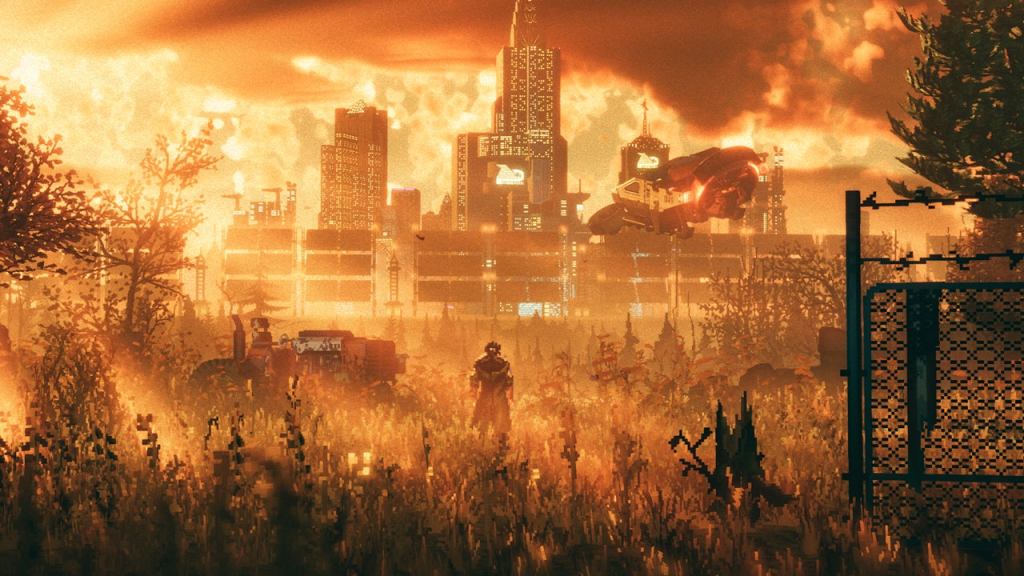
I mean, just look at it! There are so many examples of these wonderful-looking shots, and it really is a way for Sad Cat to flex their artistic muscles. Even with some visual glitches and stutters here and there, it is more than made up for by just how beautiful this game is to look at graphically, even where the content can be heinous and grim. Yes, the game looks fantastic, but they have almost done too good a job of painting such a grimy and downtrodden world, both through the visuals and through the world-building, lore, and story. The main compelling factor is finding more about this horrible world, and it somehow just gets worse and worse. Learning about humans essentially becoming currency, with illegal and unwilling organ donation becoming a desperate ploy for money in this universe, kind of sums up just how grim this world is, and it is all a result of this massive class divide that is shown. Perhaps most interesting is that none of this is really present within the central conflict aside from a few nods, making a lot of it optional, implicit information you can find if you want to dig too deep. That may be annoying for some, but I found it interesting, allowing the player to unravel this dark underbelly of society for themselves. The central plot of Reach learning to become human is rather on the nose at points, but it is sufficient enough to carry you through the game, with all of this going on under the surface. It is the other characters and Reach’s support of them that is the most interesting, with Reach finally giving them a chance to fight for what they deserve. For how bleak the world around the story is, it is actually quite sentimental and hopeful, offering a nice blend that keeps things consistently fresh and interesting to play through.
The gameplay of Replaced is nothing to write home about, but it is still solid enough that it supports its great narrative framework substantially. Gameplay can be split into platforming and combat, both of which are rather simplistic but offer a fair amount of challenge and fun factor. The traversal is the most consistently fun aspect, obviously borrowing a lot from Uncharted (yellow paint included) and not really shying away from that fact. You can swing on poles, climb up and shimmy along ledges, and even double jump using the recoil from your gun, which feels cool every time. There is no real in-depth mechanic to learn with traversal; it is purely jumping from ledge to ledge. But during sequences where you are hiding from a drone, for example, these segments become their own little puzzle that feels tremendously satisfying if you pull them off on the first try. One sequence towards the end is essentially a boss fight that is fully testing your traversal and timing skills, and it can be pretty tough to get right.
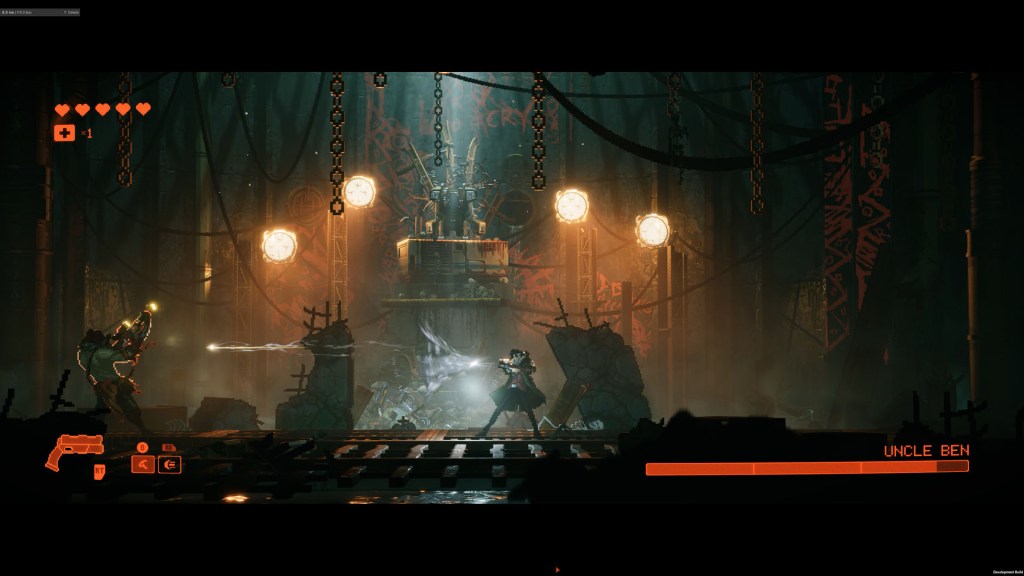
The combat is where the real difficulty comes in, sometimes to a degree that feels unfair. Taking ideas from classic beat-em-ups, along with some Batman Arkham free-flow style, the combat is very satisfying, but that is mainly down to some of the ridiculous encounters you have to overcome. They start off very easily and then very quickly ramp up the difficulty, which will definitely part the crowd in terms of who is good enough to actually beat this game. Some of the boss fights are really tough and force you to fight an onslaught of enemies while fighting the boss himself in long, endurance-based encounters. It is mechanically quite simple, with a dodge for red attacks, a counter for yellow, and then some special attacks of your own to use amongst the constant button mashing of hitting things. Some of the dodge/counter windows you get are tremendously small and can feel unfair, but once you overcome some of the harder challenges in the middle of the game, you do start to feel like the super-soldier that everybody refers to you as in-game. Most of these gameplay segments are well-paced, never giving you too much of one thing. Some small puzzle segments are thrown in too, which are a bit dull, but they do at least offer a bit of variety aside from punching and jumping around.
Replaced is not a perfect game, but it is certainly a fun and beautiful one at times, and if you love rich worlds, specifically bleak sci-fi ones, you will be right at home here. I definitely would not give this a go purely for the gameplay, as none of it is particularly innovative enough to be worthy of experiencing. Its gameplay definitely serves as a pacing mechanism for its story more than anything, and it is of suitable quality to match that task. Perhaps the biggest incentive to give this a go, though, is that it is nice and short, not overstaying its welcome at all. At around 8 hours long, this can be done in a few short sittings at least, and if you need a break in between a big RPG commitment, then this could be the game you are looking for. I did enjoy my time with Replaced and would recommend it to you if any of this sounds enticing, because there is likely something here you will love.


Leave a comment