
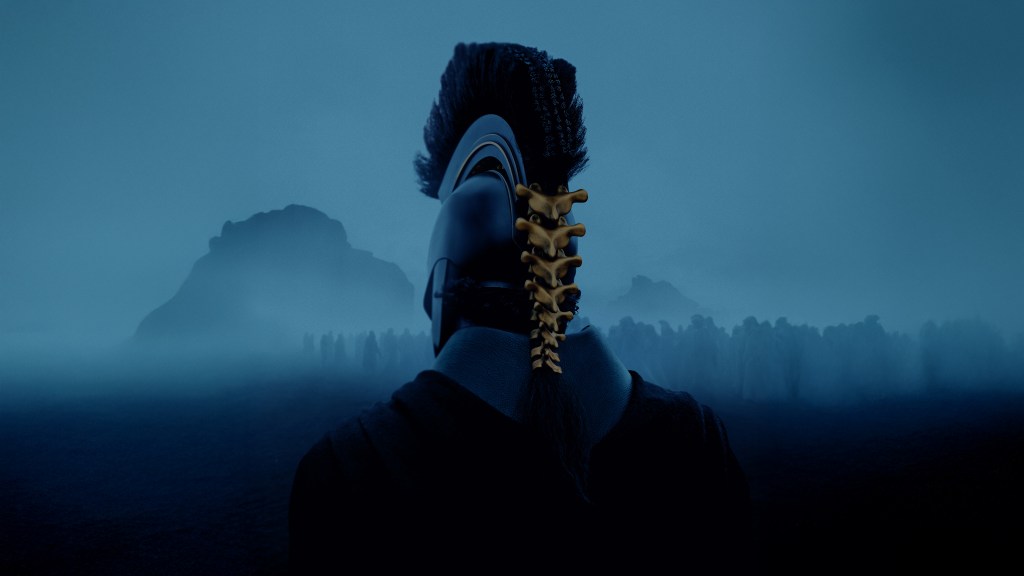
Christopher Nolan is a household name for a reason, and no amount of ponciness or pretentiousness from film elitists will ever change that. He is one of the most popular directors in the world, and his work has affected many and influenced them, especially when it comes to the degree of blockbuster filmmaking that he champions. There is a snottiness directed towards him by film elitists, mostly due to his overwhelming popularity, but that has never made any sense to me. Yes, some of his films are a bit overrated, but I would argue he has a couple of masterpieces in his catalogue, and that should be celebrated. It is beautiful to see the event that is the release of a new Christopher Nolan film, with those who do not go to the cinema very often flocking in masses to go and see his latest work, purely on his name alone. That is a rarity in modern filmmaking, and his talented auteurship should definitely be celebrated. The ‘Barbenheimer’ phenomenon of 2023 was a brilliant event that showcased the pull of his reputation, and it certainly helped garner him new fans who went for Barbie and ended up loving Oppenheimer. With such a masterpiece of a film as Oppenheimer is, Nolan’s next project was always going to be a highly anticipated release. When there was chatter about him adapting Homer’s ‘Odyssey’, with a star-studded cast at his disposal, that anticipation grew into full-fledged hype. That wait is over now with the release of The Odyssey, and judging by the glowing reviews and unbelievable box office success, it is fair to say that the hype has been lived up to. Whilst I have some minor gripes with Nolan’s editing preferences, as I do with most of his filmography, that does not stop me from denying this film as a wonderful piece of work that is truly a master firing on all cylinders.
The Odyssey adapts the famous ancient Greek poet Homer’s ‘Odyssey ‘, detailing the long journey of Odysseus (Matt Damon) back to Ithaca after the Trojan War. Absent from his position as the King of Ithaca for ten years during the war, his journey back takes him another ten years, as he faces many trials that the Gods have placed upon him. He will take his men through the caves of a Cyclops, the harshness of Poseidon’s waters, and legions of Laestrygonian giants, and many other events that will test Odysseus and his men’s will to their limit. Meanwhile, Telemachus (Tom Holland), still holding out hope that his absent father will return, sets off on a quest of his own to find what happened to him after the Trojan War ended. This leaves his mother, Penelope (Anne Hathaway), at the mercy of her many suitors back in Ithaca, trying to marry her in the King’s absence and claim the throne for themselves. She also worries about Ithaca being under threat from ‘people from the sea’ who violate Zeus’s law about respect between a guest and their host. A city without its king, a world left scrambling to recover after an incredibly taxing war; Ithaca needs its king back and this is the story of Odysseus’ journey to reclaim that throne.
To preface, I did not watch this film in IMAX. I do think the fact that this was fully shot with IMAX 70mm is a little bit much, and, frankly, the fact that you cannot get the ‘proper’ experience if you do not indulge in the IMAX format is rather elitist. After all, not everybody has an IMAX screen near them, nor can they afford to pay the crazy prices for it. That being said, watching this film ‘normally’ does not even slightly detract from the enormous scale and epic nature that Nolan has crafted here. Collaborating with Hoyte von Hoytema for cinematography again, even with the standardised format in normal cinemas, there is a sense of scale created that few films manage to capture. Nolan has always liked his films loud and larger than life, and this is certainly no different. People often criticise his films for being too loud, so much so that you cannot hear the dialogue over the chaos unfolding or the deafening score playing over the top. This is thankfully not the case here, with the sound mixing being perfect for keeping that epicness without the caveat of muffled dialogue. The sound design for everything is crisp and wildly effective: the crash of the waves against the screams of Odysseus’ crew, the clanging of metal during battle, and the otherworldly sounds of fantastical creatures, like the Cyclops’ scream. The latter pierced my soul and was horrifying in a way I did not know Nolan was capable of. Nolan has often teased the idea of him doing a horror film, and little tidbits in some of his films give me confidence he could do that extremely well one day. None have done so as much as Odysseus’ crew meeting Circe, which uses some of the most mind-bogglingly practical effects I have seen, probably ever. That scene in particular is edited excellently, shot deviously, never showing too much, and scored perfectly by Ludwig Göransson to create a horrific sequence that is some of the best horror of the year. Speaking of Göransson, it is abundantly clear now that he is climbing into the upper echelon of film composers, among the genius likes of Williams and Zimmer, with another beautiful score that hits every mark. Some of the films bigger moments, particularly towards the end are intensified greatly by his work. All those huge impactful and loud scenes are brilliant in all departments alone, but that score is the icing on the cake, bringing it all to another level.
The story of Homer’s ‘Odyssey’ itself is such a foundational piece of work that it is the basis of so much literature that we know and love today. As one of the longest surviving stories in human history, it is obviously such a daunting thing to adapt due to how beloved and important it is to get right. Homer’s original is obviously rather fantastical and full of gods and monsters at every turn. By no means to its detriment, it is fundamentally a straightforward story of Odysseus’ quest and eventual homecoming. Because of Nolan’s typical need to make things gritty and rein in more fantastical elements of the stories he creates or adapts, I will admit I was a bit skeptical about this project when I first heard about it. Regular readers will know I love a good bit of fantasy and would rather that be embraced as much as possible. However, with Nolan’s approach to this story, he more than justifies his grittier approach. Using the backdrop of the end of the Trojan War, Nolan manages to simultaneously tell the story of Odysseus as this great hero on a long journey, but also as a heavily flawed man who is haunted by the loss of his men and his own actions during the war. There are certainly themes of PTSD and self-destruction at play, and it works extremely well. Instead of being a peppy, charming leader, he is a principled and calculated man who is hailed as a hero by everybody but himself. He does what he believes is necessary to survive on the journey, with the safety of his men being paramount due to all he has lost in the war before. With all his know-how and true talent as a leader being mixed with all his conflict and guilt, it all comes together to create a fascinating adaptation of the character, whom Damon manages to portray wonderfully. Although the main meat of the film is dedicated to Odysseus, the other characters do have a fair amount to do. Tom Holland’s Telemachus is striving to match his father’s legend whilst driving off his mother’s suitors and defending Ithaca; Robert Pattinson’s Antinous is one of said suitors and is trying to get his grimy hands on the throne, and Anne Hathaway’s Penelope is still waiting for her husband to return home. These are just some of the many great characters, all of whom are essential to accelerating the urgency of Odysseus’ return. Penelope is unbelievably loyal, but even she cannot be alone forever, and Antinous is desperate to fill that gap and will carve his way through Telemachus to get what he wants. So much to do with these characters hinges on Odysseus’ return, which in turn makes his journey even more compelling due to the high stakes. The third act of this film is absolutely nail-biting, and all of these stories converge spectacularly. Nolan shows his talent not just as a director but as an extremely effective writer in this film, both in terms of dialogue and the narrative, and creates one of his best screenplays here.
I could go on for ages about how masterfully made this film is, how many characters I love, but you get the point. This film is magnificent, and it is certainly among the best of the year. As mentioned, I had some minor gripes with the jumpy editing style, as I do with many of Nolan’s films. Some scenes perhaps move a bit too quickly, and conversations are not left to breathe as much as I would like, but this does not stop me from giving this film a perfect score. After all, my scores are based on how much I would recommend this film as much as they are about the quality of the package, and with all the quality that oozes out of this film, minor gripes pale in comparison to the overall craft here. If you do not watch this film in a cinema, you are missing out greatly, as it functions as much as a stellar film as it does a stellar experience. Judging by the overwhelming box office success of The Odyssey so far, it seems many have got that memo, and it is so lovely to see a film so unanimously praised and adored by the masses. Not only is this a spectacular piece of art and a win for everybody who worked on it, but it is also a great moment for modern cinema culture. Whether streaming services exist or not, if you promise a good enough film and deliver, people will go and see it, and hopefully fall in love with cinema as much as many of us have.
 Screen Addict
Leave a comment