
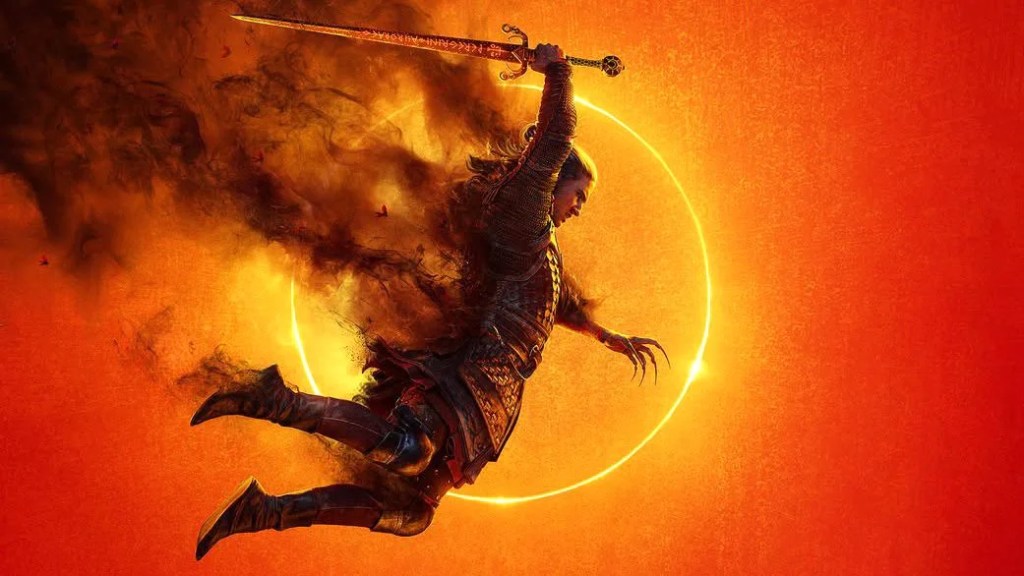
It’s no secret that I love a good RPG. I have talked many times on this website about how much I love to soak myself into a sprawling story and become engrossed in whatever role I or the game wants me to take up. One of my absolute favourites is Vampire: The Masquerade – Bloodlines, because although it is an imperfect game when it comes to things like combat and any actual gameplay systems, the way it throws you head-first into that world without holding your hand has always been excellent for the RPG approach. It demands you learn the world around you and forces you into hard choices about how you build your character and their story. Still, one of my favourite things about that game is purely its concept: being a vampire and playing with that power fantasy, as well as uncovering some deep and twisted vampire lore. With anything vampire-related, it is always particularly interesting to see the different ways some of the classic rules are interpreted. But in a game, specifically an RPG, that intrigue turns into pure excitement when you realise some of the amazing powers you can pull off. The Blood of Dawnwalker carries that excitement throughout the game, delivering a vampire power fantasy, but with a twist that keeps it refreshing: you are only a vampire half the time. This completely changes how you interact with the world around you, either through your combat approach or even something as simple as how you move about the world. Studio Rebel Wolves, full of ex-Witcher 3 devs and thus an abundance of know-how, have crafted a deeply interesting RPG, full of exciting systems, and set in an extremely engrossing world. But perhaps the most exciting thing here is the experimentation Rebel Wolves have done with the RPG formula, owing to The Blood of Dawnwalker‘s fascinating time mechanic.
The Blood of Dawnwalker is set in 14th-century Europe, placing us in the fictional Vale Sangora of the Carpathian Mountains. The valley is plague-ridden, as with most of Europe, and everybody is struggling to get by. However, one fateful day sees a group of vampires travel to the valley and seize control of the kingdom. They cast aside the previous rulers with little trouble, and they opt to rule the valley as their own. They forgo all taxation and commitments for everybody in the valley, allowing them to live as they choose, but they have just one demand in return. Every month, all must congregate at the church and offer a sample of their blood to the vampires. Brencis, the main vampire lord, talks a few times about how it is a fair trade and that if they are too weak to give their blood, they are too weak to live anyway. The weak of the herd are culled in this process, but those that keep their strength live relatively unrestrained lives. Still, those in Laslea, a village in Vale Sangora, are growing restless. We are placed with Coen, a young man who has to look after his siblings and his sick mother with his father, Pieter. In the build-up to Sunday’s ceremony, some of the Laslea residents, including Coen and his father, stage an uprising, attempting to drag the vampires into the silver mines. Consistent with vampire lore, silver is a major weakness for the vampires, and they see this as the only way they can beat them. The vampires catch on to the attempted coup and set a trap for everyone in the mine, massacring most inside. Pieter is taken by the vampires, along with the rest of Coen’s family, to be made an example of at Brencis’ upcoming coronation. During the whole debacle, Coen is turned into a vampire, but because some of the silver from the mine enters his bloodstream, he becomes a Dawnwalker. This means that he is human by day and vampire by night. The coronation is in 30 days’ time, so you, as Coen, must explore Vale Sangora, trying to gather allies and find a way to get your family back.
The most important thing to know about The Blood of Dawnwalker is that this 30-day time limit means something. This is not like The Witcher 3 where you can put off finding Ciri for hundreds of hours because you want to explore and do every single side quest you come across. Time is used as a currency here, with each day and night consisting of eight time segments. Some quests may take up only one segment; some take several, so it is key that you decide whether it is worth doing a certain thing, because you will not be able to do all of it. Similarly, all open-world activities cost time to do, namely clearing beast lairs, guard camps, or ritual sites. Currency is certainly the right word to use in reference to time, because very often you are getting something of value for doing each of these things. Completing activities usually rewards you with some gear and a skill point, and, of course, this contributes to building your character. It does help that many of the side quests are well written too, and even if they do not lead you towards saving your family, or they yield pitiful rewards, often the story is interesting enough that you do not feel your time is wasted. Many points in quests will have certain choices that can affect how long it actually takes, meaning that if you want to do as much stuff as possible, you need to choose wisely. Many RPGs give you choices that feel like they might matter, but they ultimately end up weightless. This is completely different here in The Blood of Dawnwalker, giving you hard choices, whether that be in the context of the story being told or just through seeing the time you have spare slip away.
The day-night cycle also affects how you play the game, as you will either be dealing with things as a human or a vampire. This is where build-craft is particularly interesting, because as a human you can use witchcraft and swordfighting skills, and as a vampire you can use special vampire abilities as well as some swordfighting ones, along with your long vampiric claws. It costs skill points as well as time to gain new skills, so you really have to think about how you are distributing your points. I personally wanted a proper vampire fantasy, so I put lots of my points into the vampiric abilities, some into swordfighting, and then I largely neglected witchcraft, apart from some useful abilities. I decided that I would make daytime when I spoke to a lot of people and completed quests for people if I could, leaving the nighttime to disrupt vampire operations and aggravate the vampire lords as much as possible. I had a strong amount of bleed damage because of my build, so I would be able to relatively quickly carve my way through enemy camps at night in a way I would not be able to in the day. The reason this works so well, though, is not because the combat really changes per se. In fact, the combat is quite basic, using a lighter version of the Kingdom Come: Deliverance directional blocking/attacking system and giving the player cooldown abilities to spice things up a bit. This fact does not really change much whether you are a vampire or a human. But it works very simply because it delivers on the promise of role-play. It felt so cool to role-play as this charming and rather innocent man in the day, only to become a supernatural powerhouse at night. This is the reason many people and I play RPGs, and this game truly lets the player indulge in the role carved out for them, ready to leave their own mark.
All the RPG aspects The Blood of Dawnwalker nails would fall flat if you did not care about the world you are immersing yourself in. Fortunately, the world designed and the story written here are perhaps the game’s biggest accomplishment. Vale Sangora is a wonderful, distinctly European landscape, and it is a joy to explore. Its lush forests, its dank and dark swamps, and its snowy mountaintops are all fantastical without feeling out of the realms of possibility. This is obviously dark fantasy, and it tries not to stray too far from that, keeping one consistent aesthetic that you can immerse yourself in. The war-torn and plague-ridden landscape is very striking, and it is incredibly important for selling you the whole story concept. Seeing all the ransacked towns, the obvious poverty and lack of welfare, it’s no wonder that the vampires have so many followers because they offer people an escape from all that struggle, for a relatively small price. The reason the Laslean population revolts is mostly down to their dignity; even though they are free of responsibility, they feel like pets and cattle to the vampires. Where many stories use vampires as a representation of very direct sexual perversion, the biting of the neck being a shining example, this takes it further and focuses on the domination of victims, giving them the illusion of freedom and yet ultimately being more trapped than they have ever been. These vampires are certainly of the more brutal variety, being able to tear people apart in seconds with their claws. The way to turn somebody into a vampire is to break off their tooth and plunge it into a person’s heart, obviously being evocative of the stake through the heart to typically kill vampires. It is important that these vampires are so strong too, as it really emphasises the power fantasy you have access to. People cower in fear when they see you run past them, turning into a wolf, or shadow-stepping onto a wall, further accentuating the domination the vampires have over these people mentally. Coen is excellent to experience all this through, because his push/pull battle with his human and vampiric side is captivating. He takes his new powers as a gift and a curse, wanting to remain human but acknowledging that his newly acquired powers may be the only thing that can save his family. Other characters recognise this moral struggle in different ways, and there has really been time taken to explore all aspects of Coen’s dilemma. There is way too much I could gush about, but I will be here all day, and it is worth discovering for yourself.
Minus some slight jankiness in the gameplay, The Blood of Dawnwalker is an incredible game and certainly among my favourites of the year. It is a must-play for any RPG fans or even just somebody who loves vampire mythology. I have not even covered how much lore there is about Vale Sangora and the vampires, but part of the magic is moving through this world and learning about it as Coen does. If you can truly immerse yourself in this world and story, it is so rewarding, and it is easily the most involved I have felt in a game all year. I ploughed through this, and the hours really do fly by, and that is generally a good advertisement for how encapsulating this game can be. I would be very surprised if this does not get mentioned going into awards season, because it really is that good. It belongs to sit amongst the finest games of the year, and if they end up making any sort of sequel, I will be there day one.

 Screen Addict
Leave a comment