
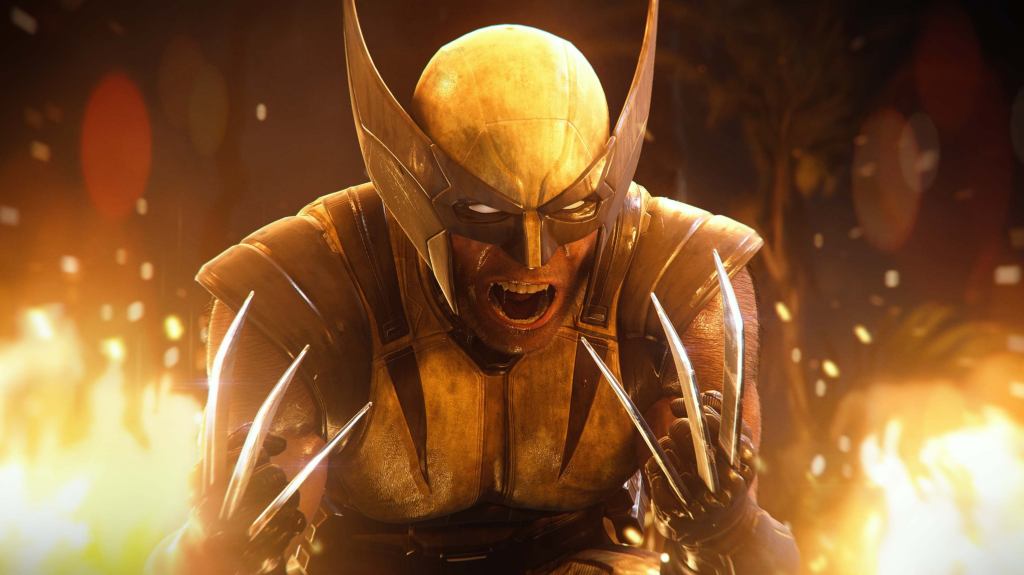
Even with the bad press and woeful decision-making at Sony as of late, one thing everybody can generally agree on about them is that they have enforced a business model that has worked for some time. They ‘won’ the last console generation by a landslide, in large part due to their unbelievable catalogue of first-party exclusive games. Game of the Year winners such as God of War (2018) and The Last of Us Part II (2020) were massive draws for people to buy a PlayStation; people wanted a slice of what they were selling because it felt like a prestige, premium product. Year after year through that PlayStation 4 generation, Sony published some excellent hallmark titles that really defined that generation, without a peep from any of their competitors. Out of those games, it is hard to pick a favourite, but Insomniac’s Spider-Man (2018) has to be in the conversation. As a massive Spider-Man fan, this is one of the games that really certified my love for the character, both in how well designed it is from a gameplay perspective and also how confidently written its story feels. It is a game I have played countless times, from playing it after school when it came out to playing it today, being the very same age as this ‘older’ Peter Parker is in the game. There are very few games I play as often as this, and that is because it gives that prestige and premium feel that I use to describe a lot of PlayStation’s first-party titles. Insomniac will always have a place in my heart because of that game, along with the other games in the series, and, of course, Ratchet and Clank, because who doesn’t love those games? With Sony’s current troubles, they needed to rely on Insomniac to pull out all the stops for Marvel’s Wolverine, their latest chapter in their very own Marvel universe. Unfortunately, this game struggles under all that pressure, feeling incredibly safe and slightly lacking the confidence of their Spider-Man games, both in gameplay and in its narrative. Contrary to what the internet may tell you, this is not a bad game, but it does have a hollowness that none of Insomniac’s recent games has.
Wolverine follows the titular stocky berserker that we know and love, with facial capture and voice performance all done by Liam McIntyre. This is a world that has not come to know the X-Men, and most of the characters in that line-up have not risen to prominence, at least not yet. Instead, we are placed with Logan on Team X, a group of mutants that work covert missions to protect mutantkind. Returning to the team after leaving a few years prior, we start the narrative with him meeting back up with Sabretooth and Mystique, breaking into a facility to save Nathaniel Essex, the founder of Team X. Captured by Bolivar Trask, a scientist attempting to rid the world of mutants, Team X led an assault on his outpost at Telambang, in a desperate attempt to save their leader. After a narrow escape and a fearsome battle with Omega Red, Trask and his Reaver forces start to launch more attacks on Mutants across the globe. Essex sends Logan to Vancouver, where a bunch of mutants are being attacked, and he finds a woman whose familiarity he cannot place. That woman is the red-headed telepath known as Jean Grey, who shares the same sentiment as Team X and is adamant about fighting for mutant-kind. Logan and Jean quickly form a bond, and the two, along with the other members of Team X, endeavour to stop Trask and protect their friends from extinction.
It is hard to write fully about the narrative without spoiling it too much, but just know that if you know anything about any of these characters, you can pretty much tell immediately where the story is going to go. When I say this is a ‘safe’ narrative, this is a big factor contributing to that criticism, but the main sin is that even with its predictability, it is rather uninteresting. Firstly, each act of the game pretty much builds up a new villain to fight, rather than having one consistent force to fight against the whole game. Whilst this keeps things relatively fresh, allowing you to fight lots of different enemies and bosses, it does impact the narrative a bit. For example, the first act is mostly dedicated to Trask, the Reavers and the establishing of the Sentinels, which comic readers will know are the giant robots that are unleashed upon mutants. The first act is, for the most part, quite strong, with Trask being an easy villain to hate with his malicious plan to kill mutants and his claims to be a saviour of humanity. But then once that first act is over, story reasons mean we fly over to Japan and start fighting the Hand and Lady Deathstrike. This is cool enough if you know Lady Deathstrike and The Hand from elsewhere, but I cannot imagine how disjointed this must feel if you do not have any ties to these characters. It does not help that Lady Deathstrike’s characterisation is quite shallow, and she just serves as a boss to fight whilst you look for a device called The Helix Engine. The third act does bring it all together somewhat, but not in a way that is surprising in any way, shape or form, and it just feels unsurprising. See, Insomniac seems to be obsessed with the exact same narrative devices as they have used in every single Spider-Man game thus far, and although I cannot elaborate on that to avoid spoilers, I guarantee you can probably work out what I mean.
Whilst the plot itself is rather dull, the characters themselves do redeem the story, to an extent. Logan himself is excellently portrayed by Liam McIntyre, and his version of Wolverine, although different, works due to the fact that you are spending so much time with the character. People are complaining about how much he talks in-game, and I do not mind that at all. When it is revealing answers to puzzles or telling you where to go, I completely understand, but when it boils down to just a more social version of the character, that works. The game would feel so much worse if he just grunted for the whole narrative, with hardly anything to say. His relationship with Jean is believable due to this; he is generally quite a charming guy who just so happens to be an engineered killing machine. If that does not work for you, that is fine, but I had no problem with his character. Other characters like Sabretooth and Mystique are definitely different from their comic-book counterparts, but the versions of them created here do work. Sabretooth in particular is a lot more interesting as a playing hard-to-get brother figure, as opposed to the completely hollow, remorseless, irredeemable murderer in the comics. Essex is also played incredibly well by Troy Baker, not that he ever phones in a performance. Again, he is very hard to talk about without spoilers, but whenever he is in a scene, he has a hypnotic presence that really commands the scene. These are not perfect characterisations, but they do work to elevate the rather sub-par storytelling. The performances across the board are very solid too, and they help contribute to that premium feel of most Sony games. From the acting to the animations and graphical fidelity, these things all help to make this a polished product that certainly does not feel like it has been made without any care.
Gameplay portrays a case where perhaps Insomniac cares too much, opting for the player, no matter the person, to be pretty comfy playing this no matter what. I am sure, if you have any presence on social media, that you have heard about the amount of handholding in this game, and it is grating, to say the least. From blue trails telling you where to go, to the near-constant nattering from characters about exactly what is going on at any given moment, there is a distinct lack of respect for player agency in this game design. This has always been a criticism of Sony’s first-party titles, and the matter is generally deflected as catering towards those who do not play games often. With this sentiment, I completely sympathise, because the last thing somebody wants to do when they have got back from their busy 9-5 is to bash their head against a wall, trying desperately to figure out where to go. However, this is quite a linear game and thus hard to get lost at all. There is so much white paint, highlighting where to go, even on some of the traversal challenges where often there is one incredibly linear path to take. Thankfully, at least, the aforementioned blue trail has been made a bit less visible in a recent patch, and you can even turn it off for collectables too now, which is much appreciated. Things like hints and tutorials can also be turned off, which I highly recommend doing if you play games regularly.
Similarly, in terms of actual combat difficulty, anybody who has ever played an action game like this should play on at least the second-hardest difficulty, if you want any sort of challenge whatsoever. I did, and that felt about how a normal difficulty should, offering a bit of friction against the player and giving a fair amount of satisfaction when beating an encounter. For the most part, the combat is mashing the square button and using cooldown abilities to dispatch foes as quickly as possible. As many have said, there is a mindless quality to it due to the lack of combos or any real variety between the unlocked abilities; it is so much fun to play and, for me at least, it has not gotten old. Even with me being on my second playthrough, I still get the same exhilarating buzz of kicking an enemy off a ledge and plunging down to impale him on the floor with my claws. Parrying enemies, getting perfect dodges; it is all here, and it is just as satisfying here as it is in any other action game. The highlight for me is definitely the rage meter, which you can build up to then turn into an unstoppable berserker, killing enemies instantly with one takedown after another. Boss fights are possibly the only time when that lack of variety shines through, particularly due to how spongy some of their health bars can be. Still, they do offer some much-needed spectacle, and the final boss is a true highlight, capping off the game on a high note. The combat does nothing to elevate itself above any other action game, but I do not think that was Insomniac’s intent.
That intent is the crux of my overall problem with Marvel’s Wolverine. Whilst polished in every department and having the general feel of a hallmark Sony title, there seems to be a lack of ambition or innovation that stops it from setting itself above the rest. The intent is clearly to cater towards those who do not play games often, who just want a burst of adrenaline, playing as a superhero after a busy day at work. Insomniac’s mollycoddling of the player is evidence of that, as is the painfully easy normal difficulty. To be clear, I do not see this as a problem, and I think that, with a lot of the general public liking this game a lot, that is further evidence. If you do not play many games and want a fun superhero game that you can play for an hour or so after work for a fortnight, this is the game for you, and I would encourage you to play it and potentially get some enjoyment out of it. However, if you are a routine gamer or X-Men fan, you may leave this experience feeling unmoved, both by its story and gameplay. I personally found it to be a fun enough time, but I would be lying if I said I was not disappointed with the overall package.



Leave a comment