
When it comes to games, there seems to be a strange stigma that the longer a game is, the better. For the everyday, casual gamer that only plays a few new releases a year, this makes sense. After all, if gaming is a side hustle for you, then you will choose how to spend your money in the best possible way, which often leans more towards longer games that you feel like you can get your money’s worth. People will look at the hundreds of hours that Crimson Desert offers and be instantly won over because they see that it will keep them preoccupied for a long time. I am not going to say Crimson Desert is purely quantity over quality, as I have not played it yet. But in a game that long, there are always going to be elements less polished than others, with filler content that does not need to be there. Because of this status quo, shorter games often fly under the radar or are shrugged off by people for fear of not getting their money’s worth. As mentioned, this is not the case for the gaming faithful, who play as much as they possibly can, but it is a noticeable trend to be aware of. In the case of Mixtape, Annapurna’s latest publishing effort, developed by Beethoven and Dinsoaur, this is a very short experience, and the amount of actual ‘game’ you get during the experience is quite minimal. Clocking in at around 3 hours, this is more of an interactive narrative experience than it is a full-on game, with short segments of gameplay to pace the story. For many, this will be a turn-off, because around £15 for such a fleeting experience may not be worth it, but that is down to how much people’s mileage varies. However, those who do not choose to give Mixtape a go are missing out on an excellent, poignant narrative that is intelligently written and beautifully presented through its soundtrack and art style. This is well worth a look, and if you have Game Pass, you really have no excuse!
Mixtape follows Stacey Rockford and her two friends, Slater and Cassandra, who navigate life towards the end of their teenage years. Directly inspired by John Hughes films like The Breakfast Club and Ferris Bueller’s Day Off, this takes familiar character types from those films and puts them in a story filled with glossy nostalgia for teenage years. Stacey is moving to New York soon to pursue her dream of becoming a Music Supervisor, a role that involves choosing the exact right music for the moment in a scene in a film, play, or anything of the sort. Her passion for music is so strong, and the story of this game plays out to the sound of the mixtape she has procured for her and her friends’ last day together. Distinctly 90s in the way it is presented, through the characters’ grungey rebelliousness, hipster fashion, and more progressive coming-of-age leanings, it does an excellent job of creating a familiar and warm aesthetic that makes you connect with these characters. It is a celebration of youth, filled with love for stories it is inspired by, and it will likely strike a chord with someone, as it did me.
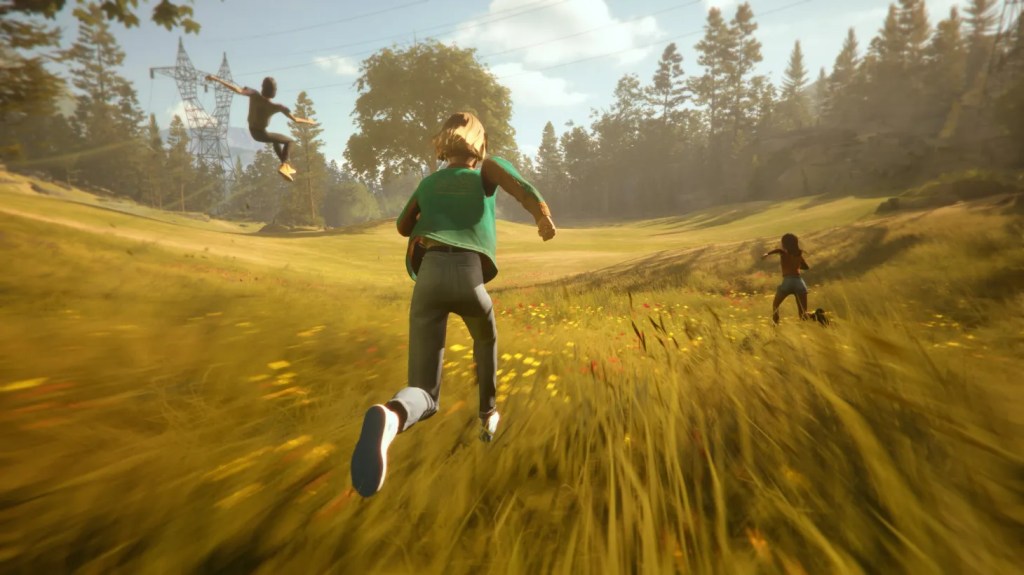
How Mixtape‘s story is presented is the most distinctive and interesting thing about it, largely due to its titular assembly of hits, all digetically procured by Stacey. There are some amazing songs here, but how they slot in behind each scene is where Mixtape really shines. Of course, Stacey is purposefully playing these songs for each scene, but each one works so well for how it is used. It may be slightly on the nose for the point its trying to make: that music is so important to how we emotionally connect with art, but it is done so well that you forgett how much it is spelling it out for you. Towards the end of the game, a segment with ‘Atmosphere’ by Joy Division plays out and it is one of the most magical parts of a game I have experienced in a long time. It is such a surreal song and the moment it plays matches so perfectly that I started welling up a bit. In tandem with the story at that point, it creates this wonderful moment; the developers firing on all cylinders to assemble such a beautiful and emotional scene. That is just one example of many, but I will not spoil the rest of what is in store. Another way it creates such a captivating vibe is through its visuals and animation, which are consistently gorgeous to look at. Characters are animated with a sort of stop-motion effect, with a more realistic-looking backdrop behind them, and it works really well. It adds to that teenage whimsy because of how expressive the characters are, and that is thanks to the animation. Environments look immense too, showing the power of Unreal Engine 5 when done right. The opening scene of the gang skateboarding, as the sun shines through the trees, is amazing to look at, and the visuals are almost worth the price of admission alone. All these details are fundamental to the aesthetic that Mixtape is trying to deliver, and they support its great story very well.
Mixtape‘s story is definitely not completely unique, but it is not trying to be. This is a celebration of those aforementioned John Hughes films’ general vibe, but also combined with a 90s blend that is effective and heartwarming. It shines, though, in its examination of youth, specifically in this case, through a nostalgic view of teenage years. Absent from this, unlike in those films it worships, is the proper conflict and drearier moments of being a teenager. That struggle to fit in, to work out who you are, some of that is in Mixtape, but it is never a direct focus. Instead, the narrative opts for a love letter to those years of your life, mainly showing what made them magical rather than troublesome. Stacey, for example, is very assured of herself and confident. She has an idea for what she wants to do in her life, and she will go on a death march to make sure she achieves it. Some may say this is an unrealistic prospect, but that is far from the truth, as I find myself in the same boat. I myself write on this blog because of my passion for what I do, out of a drive to make something out of my passion, and I will always be trying my best to get to a point where I can build a career from it. As a teenager, I was similar, and for that reason, this really connected with me. Avoiding the messier elements of teenage years is also a deliberate choice, focusing on the moments that matter and those that you would think of when reminiscing about your teenage years. Slater remarks at one point that his days as a teenager are like making an album, with some tracks being better than others. The ‘Greatest Hits’ are the things you think about later on when looking back to your youth, not the filler and useless baggage that we do not want to relive, but instead those magical moments that make the idea of being young so good. It is incredibly intelligent in the way it handles this idea, and I think it is very refreshing to see a story that pushes aside the teenage awkwardness and instead celebrates what was great about that time of your life. As somebody finding my feet, feeling similar sentiment to the characters at that point in my life, and even now, this really struck a chord with me in a beautiful and emphatic manner.
I have seen a lot of the criticism of Mixtape, a lot of which is baseless and from idiots who have not played the game. Some criticisms are, of course, legitimate; the fact that this is a game and has very little gameplay is a fair point to make. In fact, those segments where you do ‘play’ the game are not that interesting, but I believe that is fundamentally not the point. They are purely little pacing mechanisms for the story, but they also give you a connection to the characters by controlling their inputs. Letting you walk around and choose the things that Stacey interacts with and tells you about builds your own connection with this for as far as you want, and from that point, it works. It will never win any awards for its gameplay, but as a complete package, this is a wonderful piece of art. Many may say that this should have been an animated series or film, but I wholeheartedly disagree. What other medium arrests you in the way a game does? It begs you to take action on the story, to see it play out at your pace, and make you feel each moment as if you are in it. To deeply connect with this story in a way that Beethoven and Dinosaur likely desired, a game is the perfect choice, letting you live moments of these teenagers’ lives as if you lived them yourself. In a story so deeply intimate and likely very in tune with players’ emotions, much like myself, being a game lets the story take you by the hand and let you walk with it. Mixtape is a wonderful game that came at the right time for me, and I do not think I will be able to stop thinking about it anytime soon. From the emotional intelligence in its story, to its killer soundtrack that complements that story on every level, to its excellent visual feast, this is a small but triumphant game that is among the best of the year.


Leave a Reply